
6.6K
Downloads
748
Episodes
Weekly sermons and Bible studies led by a retired pastor of the Lutheran Church-Missouri Synod
Episodes

2 hours ago
2 hours ago
This Sunday is the First Sunday after Trinity in the One Year Series of readings. (Note that in the Three Year Series of readings, the readings are counted as the Sundays after Pentecost, not the Sundays after Trinity, as is done in the One Year series. Those using the Three Year Series will call this the Second Sunday after Pentecost, which is also correct. I will stay this year with the terminology traditionally used for the One Year series, though.) This Sunday begins the non-festival part of the church year. We have completed the story of the life of Christ while here on earth, and His return to His Father at His ascension, and the promised coming of the Holy Spirit.
Now we enter a more general season, thinking about what the saving work of our Triune God means for us and our lives and future, as we wait for the return of Christ on the last day or for our being called to eternal life in heaven if our death happens sooner. This season is not highly structured, but covers many topics about Christ and His work and teaching and what all that means for our lives. This week, we hear of God’s great love for us and how that calls us to seek to love one another in return.
The Old Testament lesson is Genesis 15:1-6. The Lord comes to Abram, assuring him that He will be his “Shield” and bless him. Abram is not so sure, though, for he had been promised to be the father of a great nation and nations. He has no children and no heirs of his own. The Lord renews His promises to Abram and says that, just as he cannot count the stars in the sky, so he will have an uncountable number of descendants. (This includes the people of Israel, the Jewish nation, but especially all who will follow in faith the descendant of Jesus, the Lord and Savior of the world. We, as believers in Christ, are spiritual descendants of Abram, too.) The Lord also renewed the faith of Abram, later calling him Abraham, and Abraham was counted as a righteous man, acceptable to God, by that gift of faith. This is a central teaching in the New Testament as well. We cannot make ourselves righteous in the eyes of our Lord by our good deeds and righteous living. We are saved only by the grace of God, by being brought to trust in Christ Jesus and what he has done for us, in His perfect life and death on the cross and mighty resurrection from the dead, and His forgiveness earned for us. If you have time and energy, look at how Paul takes this Genesis 15:1-6 passage and shows how God’s saving grace is also for us, in Romans 4:1-25 and Galatians 3:1-14, 24-29. The whole first half of the church year showed us how our Lord “justified the ungodly” through the saving work of Jesus. So, Paul says, for “the one who believes in Him who justifies the ungodly, his faith is counted as righteousness” (Romans 4:5).
The psalm for this Sunday is Psalm 33:12-22. The Lord is pictured as looking down at the earth. The Lord is not impressed by “great armies,” “strong warriors,” and “war horses.” They cannot ultimately save. Most important is that people “fear” the Lord, honor and respect Him, and “hope in His steadfast love.” He is the One who can deliver from trouble and famine and ultimately from death itself. “Blessed, then, is the nation whose God is the Lord,” and whose “souls wait for the Lord.” As the Lord was the “Shield” and blessing for Abram in the Old Testament lesson, Genesis 15, so He is “our Help and our Shield,” the psalmist says, as “we trust in His Holy Name” and “hope in His steadfast love.”
The Gospel lesson for today is a parable of Jesus from Luke 16:19-31. There was a “rich man,” who “feasted sumptuously every day” and had “the finest of clothes.” He seems to be richly blessed with material possessions, and the Greek indicates that he lived in an “impressively gated” home. In contrast, there was “a poor man” who was laid at his gate by others. This “poor man” seems to be sick and disabled and covered with sores, something like ulcers. (The same word is used in Revelation 16:2.) The hope was that the rich man would at least share with him some scraps, some leftovers, from his food. The rich man seems so selfish and self-centered, though, that he ignores the poor man and does not want to be bothered by him, and helps him in no way. This is the only parable where Jesus gives someone a name, and the poor man was named “Lazarus” - a form of a name which means “God has furnished help.” Though Lazarus was so poor and sick and troubled, the Lord had brought him to faith and trust in Him, no matter what his circumstances. And when Lazarus soon died, he was taken to heaven by angels to be with the Lord, and with Abraham and other believers, also there by God’s grace through the gift of faith. In contrast, the rich man, without trust in the Lord or love and care for anyone but himself, ends up in Hades, in hell, a place of great torment and suffering. The rich man would not help Lazarus, but he now wants Lazarus to come and help him, even with just a drop of water. There is a chasm between heaven and hell, though, so that no one can pass from one place to the other. The rich man finally thinks of some others, his brothers, and wants Lazarus sent from the dead to call them to repentance. Abraham reminds him that the brothers have the Scriptures, Moses, and the Prophets. If they won’t listen to the true Word of God, through which the Lord Himself speaks and works, even someone coming back from the dead would not convince them. How true the Words of Jesus were. Jesus raised others from the dead, including another man named Lazarus (John 11), and Jesus Himself would rise from the dead, yet most of His fellow Jews still rejected Him and His love and His Word, and would miss out on the love and forgiveness and new life the Lord wanted to bring them in Christ.
In the Epistle lesson, 1 John 4:16-21, John reminds us who we are now as Christians. We have come to know, but also to believe and trust in the love God has for us, in Christ our Savior. (See the Words just before this passage in I John 4:9-11. John says, “If God so loved us, we also ought to love one another.”) This is not a way for us to earn God’s favor. We already have His love in Christ. “We love because He first loved us,” and made the greatest of all sacrifices for us. An old Lutheran pastor, Fred Lindemann, wrote, “We are loved undeservedly” by God. We did not deserve His love, but He gave it to us anyway, in Christ, because His love for us is so great, and he wants us now to grow in that love, in gratefulness to Him and in care for others and in certainty about our future, now and eternally with Him, in His love. And so, Lindemann wrote, we can also seek to love those around us, even those who seem to be “undeserving,” as we remember His love, first, for us, who were undeserving. Only Christ has the “perfect love that casts out all fear,” in what He has done for us, and as we “abide in Him” and His love and His Word, our strength to look beyond ourselves and love others can grow, too. After all, Christ died for them, too, and “desires all people to be saved and to come to the knowledge of the truth.” John is not afraid of preaching the Law. He says, “If anyone says, ‘I love God,’ and hates his brother, he is a liar.” John, above all, wants to share God’s love and forgiveness in Christ for our own failures, and to strengthen us to share that same love and forgiveness with others, for all people need Him and His Word and love.
6 days ago
6 days ago
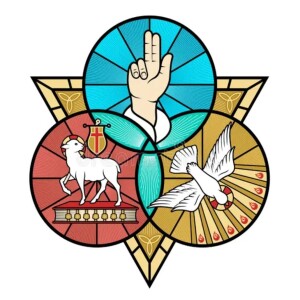
Last Sunday was a remembrance of Pentecost and the sending of the Holy Spirit on that day, with His vital work of bringing people to faith and keeping us in faith through the Word of God and the Sacraments. The week following is always Holy Trinity Sunday, a day of remembrance for the true nature of our God, as revealed in Scripture: the only true God, the One True God, yet three Persons or Beings, Father, Son, and Holy Spirit.
The psalm is Psalm 29. David praises the True Lord God and calls upon all heavenly beings to give Him glory for His strength and power, and to worship Him. That majestic power can be seen all over our natural world in thunder and lightning and mighty storms and shaking of the earth. The Lord sits enthroned as King over the waters and the floods, the many waters of this earth, as well. (This psalm is also appointed to be read when we read of the baptism of our Lord Jesus and the Word of God connected with water, by the power of the Holy Spirit, at Jesus’ baptism and at the baptism of thousands at Pentecost and at our own baptism. The Spirit brings faith and new life through water connected with His Word. See Matthew 3:16-17 and Acts 2:38-41 and Acts 22:14-16, etc.) David then closes His song of praise in Psalm 29, asking the Lord to give strength to His people and bless His people with peace - the peace we all need through Him in our troubled world.
The Old Testament lesson is Isaiah 6:1-7. Isaiah sees a vision of the Lord, with some of His angels, His seraphim. He was sitting upon a throne, high and lifted up, and yet His robes filled the temple on earth, and He filled it with smoke, too, showing His presence. Isaiah thinks that he will die, as a man with unclean lips, a sinner, with sinners all around him, since he had seen the holy, holy, holy God. Instead, the Lord shows His mercy and sends an angel to touch the lips of Isaiah with a burning coal. And the Lord promises, “This has touched your lips; your guilt is taken away and your sins atoned for.” Isaiah did not atone (pay the price) for his sins. The Lord atoned for Isaiah’s sins, prefiguring the atoning work of His own Son, Jesus, when He came to this earth as a true man to pay the penalty for the sins of all. The fact that the angel said “Holy, holy, holy is the Lord” also gives a glimpse of the Lord being more than one, the Trinity. (See also Psalm 99, which says something similar. “The Lord reigns… Holy is He!… Holy is He!… The Lord our God is holy!”)
The Old Testament often emphasizes that there is only One True God, over against the sinful polytheism and false gods all over the world, the idea that there are many gods and goddesses from which to choose, and which control different parts of the world. Deuteronomy 6:4 says, “Hear, O Israel: The Lord our God, the Lord is One.” And the First Commandment warns us against having any other so-called false gods. See also passages like Isaiah 44:6,8: “Thus says the Lord, the King of Israel and His Redeemer, the Lord of hosts: I am the first and I am the last; besides me there is no god… Is there a God besides me? There is no Rock; I know not any.” See also Isaiah 45:21-23: “Who told this long ago? Who declared it of old? Was it not I, the Lord? And there is no other god besides me, a righteous God and a Savior; there is none besides me. Turn to me and be saved, all the ends of the earth! For I am God, and there is no other. By myself I have sworn; from my mouth has gone out in righteousness a word that shall not return. To me every knee shall bow, every tongue shall swear allegiance.”
At the same time, there are many passages and prophecies that point to the Trinity, without explaining it all - One God and yet three Persons, at the same time. We heard last week of God saying “Let us make man in our image” (one image and yet the plural “us” and “our”) and “let us go down” (Genesis 1:26 and 11:7). The Spirit of God appears again and again: Genesis 1:3 and Psalm 51:11 and Joel 2:28 and Ezekiel 36:27 and 37:14 and on and on. There are also prophecies of a “virgin birth” and a Son born (pointing to Jesus) who is Immanuel, which means: “God with us” (Isaiah 7:14). And soon after we hear in prophecy again of that Child being born, and “His Name shall be called Wonderful Counselor, Mighty God, Everlasting Father, Prince of Peace” (Isaiah 9:6). Here are references to the three Persons of the Trinity: the Father, the Son (the Prince of Peace), and the Wonderful Counselor, (the Holy Spirit) yet there is only One Mighty God. I could go on and on, with more passages, but that is beyond the scope of this study.
And of course, the Triune God is most clearly seen in the New Testament, in fulfilling the many prophecies of the Old Testament. Even there, though, there is no nice, neat, humanly understandable explanation of the Trinity. Our Epistle lesson for today, Romans 11:33-36, simply speaks of the “depth” and “riches” and “wisdom” and “knowledge” of God. He and His ways are “unsearchable” and “inscrutable.” The Greek word for “unsearchable” means literally that - something that cannot be searched out and explained. The same word is used a few times in the Greek version, the Septuagint, of the Book of Job, where Job speaks of God, “who does great things beyond searching out, and marvelous things without number” (Job 9:10). The word “inscrutable” literally means, “not to be tracked out.” The only other place it is used in the New Testament is in Ephesians 3:8, where Paul speaks of “the unsearchable, unfathomable riches of Christ” - for as Paul also says in Romans 11:36, “For from Him and through Him and to Him are all things. To Him be glory forever. Amen.” In contrast, in the Old Testament, the only place in the Greek Septuagint where this word appears is in Jeremiah 17:9, where the Lord speaks of the incomprehensible sinfulness of the human heart left on its own. “The heart is deceitful above all things, and desperately sick; who can understand it?” So Paul refers, in Romans 11:34-35, to Isaiah 40:13-14, which says, “Who has measured the Spirit of the Lord, or what man shows Him his counsel? Whom did He consult, and who made Him understand?” No one, of course! So Paul writes, “For who has known the mind of the Lord, or who has been His counselor? Or who has given a gift to Him, to God, that he might be repaid? God owes us nothing, but He has given us everything we really need, including our salvation, as a gift through His saving work as our Triune God.
Even in the New Testament, then, there is no neat, perfectly understandable definition of the Trinity. We do hear that “there is no God but one” (1 Corinthians 8:4), and yet that we are to “Go therefore and make disciples of all nations, baptizing them in the name of the Father and of the Son and of the Holy Spirit” (Matthew 28:19-20). Paul blesses us with the words, “The grace of the Lord Jesus Christ and the love of God and the fellowship of the Holy Spirit be with you all” (2 Corinthians 13:14). The Scriptures simply describe the One Triune God at work for us and our salvation. I wish that the One Year Series of readings included the second half of Acts 2, where Peter preaches, “This Jesus God raised up, and of that we are all witnesses. Being therefore exalted at the right hand of God, and having received from the Father the promise of the Holy Spirit, He has poured out this that you yourselves are seeing and hearing… Let all the house of Israel therefore know for certain that God has made Him both Lord and Christ, this Jesus who you crucified… Repent and be baptized every one of you in the name of Jesus Christ for the forgiveness of your sins, and you will receive the gift of the Holy Spirit. For the promise is for you and for your children and for all who are far off, everyone whom the Lord our God calls to Himself” (Acts 2:30-33, 36, 38-39).
As Christians, we have three creeds that faithfully express key elements of what we believe. The longest of these, the Athanasian Creed, speaks the most about the nature and unity of the Trinity, One God and yet Three Persons. It is long and complicated, though, and we tend to use it only once a year, on this Trinity Sunday. Just keep listening, above all, to the Scriptures themselves and how they reveal to us God’s saving plan.
The Gospel this week is John 3:1-15 (16-17). I will write only briefly about this, as it is familiar to most of us. Nicodemus comes to Jesus, thinking that He is a great teacher, sent from God. Nicodemus is confused, though, by Jesus saying that everyone needs a whole new birth, because of the reality of sin and the sinful hearts we all have, left on our own. Jesus speaks of being born again, from above, through “water and the Spirit” in the gift of baptism and the Word of God, the “testimony” of Christ that He is “the Son of Man” and the true “Son of God who would be lifted up” on the cross, “that whoever believes in Him may have eternal life.” For God, in His love, even for us sinful people, sent His Son, not to condemn the world, but that the world might be saved through the gift of faith in Him. Jesus, again, simply speaks of the One True Triune God - the saving plan of the Father, Son, and Holy Spirit at work for us. There is our hope. We can’t fully understand it, but we believe it, and, by the gift of faith, the Triune God works in us through the Word and the power of the Holy Spirit.

Thursday May 21, 2026
Thursday May 21, 2026
This Sunday is known as Pentecost Sunday. Originally, this was a Jewish Spring harvest festival, seven weeks after the Passover celebration. (You can read about this in Deuteronomy 16:9-12, Exodus 34:22-24, and other places in the Old Testament.) Three times a year, all Jewish males were to be in Jerusalem for some of these festivals, and that is why many extra people were in the city on the day the Lord chose to send His Holy Spirit in the very dramatic way we read about in today’s readings. Some also call this WhitSunday, suggesting the Holy Spirit's wit and wisdom in bringing many people to faith in Christ on this day through the Word of God proclaimed to them. Others refer to it as White Sunday because some churches later had large numbers of people wearing white baptized on this Sunday, remembering that 3,000 people were baptized on that first Pentecost.
The Old Testament lesson is Genesis 11:1-9. After the fall into sin, sinful people, “the children of man,” thought that they could control their own destiny and tried to make a name for themselves by building a great city and a tower reaching into the heavens themselves, as rivals to God. They had one language and thought they could do whatever they wanted. Nothing seemed impossible for them. The Lord humbled them by confusing their language into many languages and scattering them all over the earth, with divisions and rivalry, people living out and reflecting their sinfulness. (Note that the Lord says in v. 7, “Come, let us go down” and do this, showing the nature of the one true Triune God already, and in other places in the first book of Scripture. See Genesis 1:26, for example.) The Pentecost story is then, as we will see, a reversal of this division and confusion, as people with many different languages are brought to one faith in the One true God, in the saving work of Christ, together with the Father and the Holy Spirit.
The psalm for Pentecost is Psalm 143, another psalm of David and a penitential psalm, as Psalm 51:1-12 was last week. David knows his sinfulness and pleads for God’s mercy. He knows that we all deserve judgment, because “no one living is righteous before Him.” (That rules out saving ourselves in any way by our own good efforts.) David also has enemies and other troubles that give him much difficulty. He says of himself, “My spirit faints and fails.” He knows that he must “meditate on God’s works” and what He has said and done in His Word, and simply seek to “trust Him.” The Lord is his “Refuge,” and alone can “teach” him and show him His “will” and “ways.” David and all of us therefore need to pray, “Let Your Good Spirit, the Holy Spirit, lead us on level ground,” through the Word of God. “In Your righteousness” (and especially the righteousness of Christ our Savior), “our souls are brought out of trouble.”
The Gospel lesson is John 14:23-31. Jesus says that people who love Him and love the Father are keeping the Word of God, but if people do not love Him, Jesus, who brings the Word of God, they are not keeping the Word. And when the Helper, the Holy Spirit, is sent by the Father in the Name of Christ, He will teach the disciples all things they need to know and bring to remembrance all that Jesus told them. That is how they could recall and record the long speeches of Jesus and accurately teach what he said - by the power of the Holy Spirit. Though Jesus was going away, He would leave His peace with them through His Spirit and help them through their troubles and fears. “The ruler of this sinful world, Satan, was coming, but he would have no ultimate claim on Jesus, though it might seem like it when Jesus suffered and died. Jesus was simply doing what His Father commanded, in submitting to suffering and death, but also in His resurrection. His love for His Father and for us was evident in all this, and through Him and the Holy Spirit, many would be brought to believe in Him for eternal life. Jesus says one surprising thing, though: “the Father is greater than I.” Jesus was true God, equal to the Father and the Spirit in the One True Triune God. At the same time, He had humbled Himself and become also a true man, not using all of His Godly power and choosing to live with some human limitations. For example, Jesus said that “no one know the day and hour that heaven and earth will pass away, not even the angels in heaven, nor the Son (Jesus Himself, here on earth), but the Father only” (Matthew 24:35-36). How that all worked and still works, we do not understand, but we can “rejoice” that Jesus has returned to His Father in heaven, and He was glorified again, culminating in His ascension. (See John 17:4-5.)
The Epistle lesson is from Acts 2:1-21, the story of Pentecost. Jesus had ascended to heaven 10 days earlier, and the early Christians, about 120 persons, were waiting to be “clothed with power from on high” (Luke 24:49). They were together in one place when suddenly there came from heaven a sound like a mighty rushing wind. In the Greek, the word can mean either wind or Spirit. Then “tongues as of fire rested upon each one of them.” In the Old Testament, God often showed His presence with fire - as He did this day, with the presence of God the Holy Spirit, with tongues of fire. Then these disciples “were all filled with the Holy Spirit and began to speak in other tongues,” other languages that they had never learned, as the Spirit enabled them. Verses 5-13 indicate that there were Jews from many different countries in Jerusalem for what for them was the annual Jewish harvest festival. They spoke a number of different “native languages” and came from many different places, as listed in this passage. Many were Jews, but some were “proselytes“, converts to the Jewish faith. They realized that these speakers were largely Galileans, from a backward, less educated part of the land, and yet the hearers were amazed and perplexed and said, “We hear them telling in our own native tongues the mighty works of God.” Some mocked these speakers as drunk, but most were simply saying, “What does this mean?” Peter then spoke on behalf of the other disciples and said this was the fulfillment of what the prophet Joel had predicted in Joel 2:28-32. Peter quotes from Joel’s prophecy that the Holy Spirit would be at work among many people, young and old, with the goal that many would be brought to faith in the Lord, for salvation. This text ends here, but it is good to read on and see that Peter also preached the Word very clearly that Jesus Christ was Lord and Savior, by His life, death on the cross, and resurrection from the dead, with prophecy about all this from Scripture. Peter also called for people, young and old, to be brought to repentance and faith in Christ and the gift of baptism, through the Holy Spirit’s work through the Word. And we hear that these old and new believers were called to “devote themselves to the apostles’ teaching” (through the Word), which is what we are doing in Bible study still today. And those believers were to continue in fellowship and the breaking of bread (in the Lord’s Supper) and in prayers. May the Holy Spirit still lead us and guide us in this way, in our worship and daily life in Christ. In this way, the Holy Christian Church is the reversal of the Genesis 11 Old Testament passage. People from many nations and languages were now being united in one faith in Christ as Savior, through the One True Triune God, Father, Son, and Holy Spirit. The Lord said, Let us now go down and do this uniting, saving work, through Christ Jesus, sent from the Father, and the Holy Spirit, working through Word and Sacraments, to this very day.
Wednesday May 13, 2026
Wednesday May 13, 2026
This 7th Sunday of Easter is an in-between time. Jesus had ascended into heaven, but the Holy Spirit had not yet come in great power on Pentecost. This Sunday is known as Exaudi Sunday in the One Year Series of readings. The Latin word means “to hear” - to “hear out” all that the Lord has to say in His Word, especially in the challenging, in-between times in our own lives.
The psalm is Psalm 51:1-12. This is David's confession after he was confronted by the prophet Nathan about the wrong he had done to Bathsheba, her husband, and the Lord Himself. You can read about this in 2 Samuel, Chapters 11 and 12. Nathan tells a story to David in Chapter 12:1-6 and then says in v. 7ff., “You are the man” who has done wrong and deserves punishment. “Thus says the Lord.” David needed to “hear” very strongly the Law of God, convicting him of his wrongdoing, so that he says in v. 13, “I have sinned against the Lord.” But David also needed to hear of the mercy of God. Though David deserved to die, the Lord said, through Nathan, “The Lord also has put away your sin; you shall not die.” There was trouble, but David also heard the Gospel of God’s forgiveness for him, and he was able to go "into the house of God and worship Him.” Psalm 51:1-6 is David’s honest confession of this sin and so many others. He knows that he was a sinner from the time of his conception and birth and that he has “done evil in God’s sight.” God would be justified and blameless in His Words, no matter what judgment He brought against David. Then, in v. 7-12 of this psalm, David prays that he would also “hear joy and gladness” in the Gospel, in the Lord forgiving and “blotting out all his iniquities.” David uses the Old Testament image of being “purged” and washed clean by sprinkling with water using an aromatic hyssop branch. (See Numbers 19:17-18 and Leviticus 14:6-7.) In this way, God would cleanse him from his sin and “create in him a clean heart’ and “a right spirit” through the presence and work of His Holy Spirit. In this way, “the joy of salvation” and “a willing spirit” would be restored to David.
The Old Testament lesson is from Ezekiel 36:22-28. The Lord has the people of Israel hear God’s message that He would act to rescue His people again from slavery, this time in Babylon and other places, and bring them back to the Promised Land. This would not be because they had been so great and faithful, but by His mercy and love. He would act in forgiveness for his people “for the sake of His own Holy Name” and as a witness to the nations. He would sprinkle clean water on His people and cleanse them from all their uncleannesses. He would give them “a new heart and a new spirit” and put His Holy Spirit within them and enable them to walk more faithfully in His ways. All this happened most especially as Christ Jesus came to be the Savior.
The Gospel lesson is from John 15:26-16:4. God had sent His own Son to be the Savior of the world. Jesus had been living a perfect life in our place and would soon complete His saving work through His sacrificial death on the cross to forgive our sins, and through His resurrection and ascension. Now Jesus promises that He would also send His Holy Spirit, the Helper from above, and that the Holy Spirit would “bear witness to Christ” (through the Word of God, the people would hear, and through the gift of baptism, as evident on Pentecost). Continuing to hear Jesus’ own Words would be crucial in keeping his disciples from falling away from faith in Him, for Jesus warns that in days ahead, these disciples would be put out of synagogues and some even be killed by people who thought they were serving God by persecuting these believers in Christ Jesus. Such people did not hear or know God the Father or Jesus as Savior, or the witness of the Holy Spirit to come. (See Acts 5:27-33, for example.) In this Gospel lesson, though, Jesus wants His disciples to hear clearly what He is saying and warning, and to remember that this time, “the hour” of persecution by unbelievers would come.
The Epistle lesson is from 1 Peter 4:7-11 (12-14). Peter reminds His fellow believers that there will be persecution at “the end of all things” before Jesus returns, but also at other times. As we heard last week, Peter calls believers to be active in prayer, self-controlled and sober, and to seek to live with love and hospitality for one another. We will not be perfect, but love and forgiveness cover over a multitude of sins. We are all called to use the gifts God gives us, according to His grace for us. If we speak, we need to be sure that people hear “the oracles of God,” the true Word of God in Law and Gospel. If we serve, we are to serve in the strength God supplies through His Word and Spirit. Nothing is for our own glory, but that in everything, God may be glorified through Christ Jesus. To our Triune God belongs the glory and dominion forever. Peter adds an Amen, and some think Peter may have intended to close his letter here at v. 11, but then increased persecution of Christians may have come, and Peter adds the words that follow, as God inspired him. Believers are “beloved,” even if “fiery trials” and attacks on us should come. This should be no surprise. Think of what Christ went through for us, even if we have to go through some sufferings, very small compared with what Christ did for us. Insults for using the name of Christ, in faith and witness, should come as no surprise. “We are blessed, because the Spirit of glory and of God rests upon us,” as we hear and use His Word, the Scriptures. As Paul wrote, “We are not ashamed of the Gospel, for it is the power of God for salvation to everyone who believes… For in it the righteousness of God is revealed from faith for faith” (Romans 1:16-17).
Thursday May 07, 2026
Thursday May 07, 2026
May 10th is the 6th Sunday of Easter in the One Year Series and is also known as Rogate Sunday. The Latin word means “to ask” or “asking,” and we will see different kinds of “asking” in our readings. Since the Risen Lord Jesus would soon return to His Father in heaven (Ascension Day on Thursday, May 14, this year), there is an emphasis on continuing to talk with Him in prayer as well. (Historically, those in some farming communities would also have “Rogation days,” when they would pray for the Lord’s blessings upon the Spring crops they were planting and for good, seasonable weather and rain.)
The Psalm is Psalm 107:1-9. The whole psalm speaks of people in various situations and circumstances “crying out to the Lord in their trouble, and the Lord delivering them from their distress.” (See v. 6, 13, 19, and 28.) The psalmist calls upon us all to pray and give thanks to the Lord for His steadfast love. He “redeemed” His people from slavery in Egypt and brought them to the Promised Land and later rescued them when they were scattered in various places, with the Babylonian captivity and other troubles. Out of that group of people, He sent our Redeemer and Savior, the Lord Jesus, and His “wondrous works to the children of man.” As some of those people redeemed by Christ, we are called to “say so,” too, and thank and praise our Lord for all the “good things” He has given to our own “longing and hungry souls.”
In our Old Testament lesson, Numbers 21:4-9, we hear that God’s people became impatient with the Lord and His ways, spoke against Him, and “asked why” He was treating them so badly. Their complaints were not true, for the Lord had provided them with manna, quail, water, and other necessities for 40 years. A judgment of fiery serpents came upon them, and many people died. Finally, the people repented, confessed their sin, and asked Moses to pray to the Lord for help. The Lord commanded Moses to make an image of a fiery serpent and place it on a pole. If people were bitten by a snake, they could “look at the bronze serpent and live,” and eventually some would enter the Promised Land. This story was also prophetic of Jesus, our Redeemer, as we hear in John 3:14-16. “As Moses lifted up the serpent in the wilderness, so must the Son of Man be lifted up” (on a cross), “that whoever believes in Him may have eternal life. For God so loved the world…” Jesus also refers to being “lifted up” in this way in John 8:28-29 and John 12:31-36. As we are brought to see Him on the cross and trust in Him in His sacrifice for us and resurrection, we too are assured of eternal life through Him. (So, there are both bad and good ways of approaching God and “asking” things from Him. Sadly, the bronze serpent was used in bad ways in later times, too. See 2 Kings 18:4, where we learn that some people preserved the serpent and made offerings to it, as if it were a kind of god. Hezekiah, a faithful king, had to break the bronze serpent into pieces, so that it would not be worshiped.)
The Gospel lesson is from John 16:23-33. These are likely the last Words of Jesus with His disciples, before they went to the Garden of Gethsemane on Maundy Thursday, Holy Thursday, evening. Jesus was preparing His disciples for His “leaving the world and going to the Father” at His ascension. We heard last week that the disciples were not asking Jesus much because they often did not understand what He was saying. He says in this passage that he had been using “figures of speech” that were hard, but He had encouraged them to pray to the Father and to Him in John 14:13-14 and in 15:16, and that He would respond to them. They were also to pray in His Name. He repeats that encouragement here. “Ask, and you will receive, that your joy may be full.” He also assures the disciples that “the Father loves them because they have loved Jesus and believed that He came from God.” The disciples say that people do not need to ask any more questions, for Jesus “knows all things.” What Jesus does know is that the disciples' faith and knowledge were still very weak. In fact, He predicts that they will soon scatter and leave Him alone, that very evening. Jesus believes in His Father and the power of talking with Him in prayer, though, and in John 17, He confidently prays one long prayer, called His “High Priestly Prayer,” for His disciples and for all believers in the future, including you and me, that we all would know the truth in Him as Savior and be kept in faith in Him. Jesus knew and still knows the value of prayer and talking with our Lord. In fact, when Jesus went to the Garden of Gethsemane, he prayed again and again to His Father, asking for strength and that His Father’s will be done, even with the agony of His suffering and death, in payment for all our sins, ahead for Him. The disciples failed miserably, unable to stay awake to watch and pray, but Jesus carried out His mission faithfully for them and for us. And at the end of our Gospel reading, Jesus gave His weak disciples and us Words of great encouragement. Jesus said, “I am not alone, for the Father is with Me” - even as He went to the cross and His death. “Father, into Your hands I commit My spirit,” He said in faith. And then came His Resurrection and Ascension and the fulfillment of His Word for His disciples for the future. “I have said these things to you, that in Me you may have peace. In the world, you will have tribulation. But take heart; I have overcome the world.” These are still such encouraging Words for us today, in Christ.
There are two possibilities for the Epistle lesson, written by early Christian leaders, empowered by the saving Words and work of Jesus. Paul writes to a younger pastor, Timothy, in 1 Timothy 2:1-6, urging him to keep praying for and thanking God for all people. Some want “no kings” today, but Paul encourages prayer for all those in high positions, that they do their duty, keeping order and authority, enabling a “peaceful and quiet life” for many, with dignity and godliness. God, above all, “desires all people to be saved and to come to the knowledge of the truth,” and that early Christians needed to be able to travel and take the Good News of Christ as far as possible in the known world. The emperors did not act kindly toward Christians, but many credit “the Roman peace” of that time for allowing these Christians to go as many places as they did, with the message that “there is only “one true God, and one Mediator between God and men, the man Christ Jesus, who gave Himself as a ransom for all, which is the testimony given at the proper time.” That testimony is the hope for all the world and for us. We ask and pray and do what we can, that it may be shared with others.
The other possible Epistle reading is from James 1:22-27. As the leader of the Christian church in Jerusalem, James, the brother of Jesus, encourages early Christians to hear the Word of God and to put it into practice. Otherwise, it would be as if Christians looked at themselves in a mirror and saw uncombed hair, messy clothes, and dirty spots all over them and then went away and forgot what they really were like and did nothing to improve their looks. Spiritually, Christians need to look into the perfect Word of God, both Law and Gospel, and act on what is good and not so good. By the grace of God, there can be blessings and spiritual growth for these people, but for those who cannot control their own tongues and language, their witness is worthless. In contrast, those who truly seek to help those in affliction, including widows and orphans, can bring blessings to them and avoid the evil world’s view of who is valuable and who is not. Essential is seeking God’s direction through His Word, and asking Christ to help us follow through on what he wishes, by His power. We are to try to “ask and seek and knock,” as He would wish for us.
Wednesday Apr 29, 2026
Wednesday Apr 29, 2026
This 5th Sunday of Easter in the One Year Series, May 3, 2026, is known as Cantate Sunday. This Latin word calls us to “Sing”! We sing in praise of the Easter victory of our Lord Jesus, after he had suffered and died in our place in payment for our sins. We “sing” also in anticipation of Jesus’ promise that He and the Father would send the Holy Spirit on Pentecost and to work through the Word of God to bring people to faith and keep them in faith in Christ.
The psalm is Psalm 66:1-8. All the earth is called to “shout for joy to God” and three times to “sing praises” to Him for His “awesome deeds.”The rescue of His people at the time of the exodus is described, along with the defeat of the enemies of God’s people. The psalm is prophetic, too, of a time (with the coming of Christ and the Holy Spirit) when the “sound of God’s praise is heard,” so that “the children of man” all over the earth will worship the One True God.
The Old Testament lesson, Isaiah 12:1-6, is also prophetic of “that day” when “God’s anger about sin is turned away” (through the sacrifice of Christ), and God comforts people and brings them to salvation through “trust” in Him. The Lord God will be their “strength and their song,” providing “the water” of life and salvation for them. This will be a time (in Christ) when “His name is exalted” and “His deeds made known among peoples in all the earth.” This will be a time for “shouting and singing for joy,” for “the Holy One of Israel,” the Lord himself, has come into the midst of people.
In the Gospel lesson, John 16:5-15, Jesus continues to prepare His disciples for what is to come very soon. He has been with them for about three years, but now He will be going to the One who sent Him, His Heavenly Father. This brings sorrow and a lack of understanding on the part of the disciples. Here, Jesus is particularly speaking about His ascension into heaven, after His death and resurrection. He says that His going will be advantageous for the disciples, for He can then send them His Holy Spirit, who will be “the Helper” for them in the days and years ahead. The Greek word for “Helper” is “the Paraclete,” wne who will come to their side to help them. The word is also sometimes translated as the Comforter, the Counselor, the Exhorter, the One Who Prays and Asks of God on their behalf. The Holy Spirit is the Third Person of the Trinity, and through the Word of God, He brings, He can convince and convict people of this world of the reality of sin and unbelief in their lives and the great danger they are in, if left on their own. The Spirit can also convince people of “righteousness,” not their own, but the righteousness of Jesus, the sinless Son of God, who can and will return directly to His Father in heaven at His ascension. God the Holy Spirit can also convince people of “judgment,” not their own, but the judgment of Satan, “the ruler of this sinful world,” whose power has now been broken by the death and resurrection of Christ Jesus. Jesus had much more to teach His disciples, but they could not bear it and handle it until after He had risen from the dead. He taught them, off and on, for 40 more days and then ascended to His Father in heaven. He would still be with them always, though not in a visible way, but the Spirit of truth would then lead and guide them into all the truth that they needed, through the Word of God provided to them, through Him and the Father and the Son. Especially the Spirit would “glorify Jesus” as Lord and Savior and declare all of the saving Words and work of the Triune God. Jesus would bless the disciples with the Holy Spirit in His resurrection appearances, but especially give the Holy Spirit and His power on Pentecost and in the days and years following and continuing even today, in the Good News of Christ.
The gift and working of the Holy Spirit, predicted in the Gospel, sent from the Father and the Son, is evident in the Words of James, the brother of Jesus, now a strong believer and Apostle and leader of the Jerusalem Christian believers. James speaks and writes to his “beloved brothers” in the faith and reminds them that “every good and perfect gift” that they have as Christians has come down from the Heavenly Father, who has provided light and life through His own beloved Son, Jesus. The lights in this universe change. God is unchanging, consistent in His saving plan for us, though, bringing us forth as a new creation, through the Word of Truth, our Lord Jesus, the Word of God (John 1:1), and the Way and the Truth and the Life, through His Word and saving work (John 1:1-3, 9-13). Early believers were only “firstfruits” of those who would come to faith in Jesus and are still coming to faith to this very day. The key, James says, is to “receive with meekness the implanted Word of God, which is able to save our souls.” That is the work done by God’s Holy Spirit, from Pentecost and onward, as He brings people to faith through the Word of Christ (and the gift of baptism) and keeps them and us in that faith. The Holy Spirit also inspired the Biblical writers to write the very Words of Holy Scriptures as a witness for Christ to the world (2 Timothy 3:14-17). Through that Word, the Holy Spirit shows us our anger and sins and filthiness and wickedness and brings us to repentance and trust in the righteousness of God earned for us in Christ. May we all, James says, be quick to hear that “implanted Word of God” and slowly and surely learn more of our Savior and His Word, so that we can share it with others, too.
Wednesday Apr 22, 2026
Wednesday Apr 22, 2026
This 4th Sunday of Easter in the One Year Series of readings is known as Jubilate Sunday. This Latin word means “to rejoice,” “to sing and to make a joyful noise” to the Lord, as we are called to do in Psalm 95:1-2. Psalm 96:1-2, and Psalm 100:1, praising our Lord for His steadfast love and saving work for us. In the midst of the penitential season of Advent, we have a “Rejoicing Sunday,” when our candle is pink, symbolizing the hope and joy of the coming birth of our Savior. Now, as the Easter season moves on, we rejoice in the Easter victory of our Lord Jesus, but are reminded in our readings that there will also be difficult and challenging days ahead - though our confidence and joy in the Lord remain.
The psalm is Psalm 147:1-11, which reminds us that it is good and fitting to keep singing praises to our Lord. There may be times when we are “brokenhearted,” dealing with “wounds,” and feel like “outcasts” in our lives. Our Creator and Preserver is still with us, though, and provides for us in His wisdom and understanding. “His delight” is not in our human strength and ability. He will lift us up, as we humbly “hope in His steadfast love” and “sing to Him with thanksgiving” for the blessings He does give.
There are two choices for the Old Testament lesson. The first is Isaiah 40:25-31. People in Israel were focusing on themselves and saying, “My way is hidden from the Lord, and my right is disregarded by my God.” They were forgetting that “their Lord is the everlasting God, the Creator of all things.” His “understanding” does not always make sense to them, but He does not “faint or grow weary" like even strong young people sometimes do. He gives “power” and “strength” to people as He knows best, as they wait for Him. He will help them to “run” and “walk” according to His plans.
The alternate Old Testament reading is from Lamentations 3:22-33. This whole portion of Scripture is about times when we “lament,” when we are sorrowful and troubled by difficult circumstances in our lives - some our own fault and others beyond our control. We are called to “wait quietly” for the Lord in these difficult times, when we wear “a yoke” of trouble and our “mouths are in the dust,” humbled by our circumstances. Others might even strike us and insult us in these weak times, as they did even our perfect Lord Jesus, as He suffered for our sake. (See Matthew 26:67 and 1 Peter 2:23.) We often don’t understand why these hard times come, but the great promises of the Lord are still there for us to carry us through. He allows us times of grief, in His wisdom, or just because we are sinful people in a very sin-filled, fallen world. He does not “cast His followers off forever,” though, but will have “compassion,” in His steadfast love. “He does not afflict from His heart.” He wants, most of all, to give us His “steadfast love and mercy that never come to an end.” The Lord is our portion,” the most important part of our life. His blessings are ours, day after day, and we have great hope in His promises, no matter what. We live by faith and say to the Lord, along with the author of Lamentations, "great is Your faithfulness!”
Why do we have these readings about sorrows and difficulties, right in the middle of the joyous season of Easter? Our Gospel lesson for today, John 16:16-22, helps us with this question. Even before His suffering and death and resurrection, Jesus was preparing His disciples for what was to come, telling them about these things, but they clearly admit that they did not understand. Jesus even uses the word “lament” to describe the sorrow and weeping that would come upon them when Jesus died and before He rose from the dead. Jesus used the example of a woman expecting a child and having sorrow and pain and anguish during the pregnancy and the delivery, until her child was born. Then she has only joy in her child, forgetting the anguish, and often even being willing to go through more of this anguish, in giving birth to other children later on. The disciples' sorrows would be great when Jesus died, but the joy of His resurrection was so great. He was only gone for a little while, and then they would see Him again. That joy in Christ and His love and forgiveness earned for them would be with them through this life and on into eternal life, as well. (Jesus was also preparing the disciples for His ascension into heaven, when He would still be with them, though in ways different from before.) These are very comforting Words of promise for us, too, who have not seen Jesus face to face as the disciples had, and yet have been brought to confident faith in Him. He promises us help, too, in our own struggles in everyday life, and one day to take us to everlasting life when we die.
There are two choices for the Epistle lesson. The first is from 1 Peter 2:11-20. Peter says that because Jesus has done His saving work for us, we are now only sojourners and exiles in this life on earth. We are called, though, to seek to live in an “honorable” way until “the day of visitation,” when Christ comes for us, and be a good witness for our Lord. We now live in two kingdoms, the kingdom of God and an earthly kingdom, where we are to be subject to the earthly authorities and their necessary right to keep peace and order and punish those who do evil. In Peter’s day, there were also servants and slaves, and the call is to respect “masters,” even those who are not very good ones. Christians are to try to do “gracious things,” things right in the sight of God, even if it means sorrow and suffering unjustly, at times, as certainly happened with Jesus Himself. Since many around us are unbelievers, we can expect people to speak against us, as if we were the evildoers. Hopefully, though, some may see and hear our good Words and deeds in Christ and come to believe in and glorify the One True Triune God and trust in Jesus, too, by God’s grace. That is seeking to follow in the steps of Christ our Savior, as we heard last week (1 Peter 2:21ff).
The alternate Epistle reading is 1 John 3:1-3, which speaks so clearly of the Father’s love for us in sending His Son, Jesus, to do His saving work for us in His perfect life in our place, His death on the cross in payment for our sins, and His mighty resurrection and ascension. We really are now the children of God, through the gift of faith given to us in Christ. (See 1 John 5:11-13 for one of the clearest statements of that fact.) Many in the world cannot recognize this because they do not know Christ. There is much we do not know about eternal life, either, but we will be with Christ, and we will see as He is, as our Risen Lord. (See Philippians 3:20-21.) In the meantime, we are called to try to live in this life in a Christ-like way. We are already counted righteous in God’s eyes through Christ’s righteousness and the gift of faith brought to us through the Word of God and our baptism. We are continually being purified, too, by confessing our sins and receiving God’s forgiveness and through the forgiveness of Christ’s presence in the Lord’s Supper.
And we keep listening to The Scriptures, the Word of God, for the strength and hope and direction they give to us, in Christ.
These readings have been especially comforting and helpful to me. As you may know, I have been living with a kidney stone. A few days in the hospital and various treatments, including a stent, have gotten my kidneys working better again. There is still some pain, at times, but it is better. The stone is still there, though, and I will likely need another procedure later this week to get the stone out. This is a minor problem compared with what many of you have dealt with and may still be dealing with. But the questions come. Why this and why now and why me? It is great to hear again this week of the amazing work and sacrifices Christ has already made for you and me, more than we could ever ask or imagine. And how good to be assured that whatever the circumstances, “The steadfast love of the Lord never ceases, His mercies never come to an end; they are new every morning. Great is His faithfulness” (Lamentations 3:22-23).
Tuesday Apr 14, 2026
Tuesday Apr 14, 2026
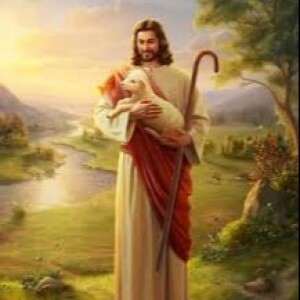
In the One Year Series of readings, the Scripture readings for this Sunday focus upon the Lord as our Good Shepherd, especially in the life and work of Jesus our Savior. (This is a week earlier than Good Shepherd Sunday in the Three Year Series and is called Misericordias Domini Sunday, with Latin words focusing on “the mercies,” “the steadfast love of the Lord,” shown particularly in His work as our Good Shepherd. This is part of Psalm 33:5: “The earth is full of the mercies, the steadfast love of the Lord.”
The Old Testament lesson is from Ezekiel 34:11-16. Ezekiel writes these words from the Lord while he is in exile in Babylon, in captivity along with His fellow Jews, far from their homeland and knowing that their capital city and temple have been destroyed, because of their sin and rebellion against the Lord. It looks like a hopeless situation for them. The Lord has not forgotten His steadfast love and mercy for His people, though. Though they have been through “days of clouds and thick darkness,” brought on by their sins and the failures of their human leaders, their shepherds, the Lord is going to go into action for them. He will seek out His lost and straying sheep and rescue them from the places where they have been scattered. He will bring them back and give them good, rich pasture land and make them lie down in peace. He will bind up the injured and strengthen the weak and remove the “fat and sleek” who had harmed them, in His justice. (This first happened when the Lord worked and allowed His people to be freed from captivity in Babylon and return to their homeland, though many Jews chose not to return home. The Lord gave them blessings and, finally, sent His own Son, Jesus, to do the saving, redeeming work for them and for the world as the ultimate Good Shepherd. So sadly, many of His fellow Jews rejected Jesus and the Father’s saving plan, and still do, but “the steadfast love and mercy of the Lord” are still available for all, in Christ.)
The psalm for this week is, of course, Psalm 23. The author is King David, a great Old Testament leader, but even he knew that He needed the Lord as his own Good Shepherd to “restore” his weak and erring soul. Images of “green pasture and still waters” are used, as David needed those, but above all, he needed forgiveness and to be led in “paths of righteousness,” following his righteous Lord. David needed the Lord’s “presence” and “comfort” and His “steadfast love and mercy” in life and in death, when he could finally “dwell in the house of the Lord forever.” (The “anointing” and the “table” remind us of what Jesus, the Good Shepherd brought us when He came: the “anointing“ with water and the Holy Spirit in our baptism and “the table” of the Lord’s Supper, where our “cup overflows” with the presence and forgiveness of our Lord Jesus. These gifts, working together with the Word of God, bring us to and keep us in faith in our Savior.)
The Gospel lesson is John 10:11-16. Three times in this short passage, Jesus calls Himself “the Good Shepherd,” fulfilling in the greatest way what the Lord said would happen in the Old Testament Ezekiel passage. Jesus was not a “hired hand” who did not really care about the sheep and would run away in a time of danger. Jesus was willing to “lay down His life for the sheep” and repeats His willingness to do so a second time in this passage. He knew His sheep, and the sheep he had brought to faith knew Him. He also had other sheep “not of this fold” that He needed to bring in and bring them to listen to His voice and be brought to faith in Him also. (Most think that He was referring to the Gentiles, for whom He also died and wanted to be brought to faith. Then there would no longer be a distinction between Jews and Gentiles. There would then be one “flock” of all believers in Jesus as their Good Shepherd, no matter their former background, in what we now know as the Holy Christian Church.) This is an affirmation of what was said earlier in John’s Gospel. In His “steadfast love and mercy,” “God so loved the world that He gave His only Son, that whoever believes in Him should not perish but have eternal life” (John 3:16) and that “Christ died for all” (2 Corinthians 5:15). John 10:17 also predicts the Easter victory of Jesus: “I lay down My life, that I may take it up again,” in His resurrection from the dead.
The vital importance of what Jesus did for us as our Good Shepherd is also made clear in the Epistle lesson, 1 Peter 2:21-25: Christ Jesus “committed no sin” and had no “deceit” in Him. Instead, “He bore our sins in His body on the tree” of the cross, suffering the just penalty for our sins. “Christ suffered for you,” Peter says to us all, and “by His wounds you” and I “have been healed” and forgiven, and though we were “straying like sheep,” we have been brought back to our Good Shepherd, who cares for us and now watches over our souls, in His “steadfast love and mercy.” How wonderful that we do not now have to watch over our souls in our own power, but have our Good Shepherd with us to help and enable us. As Peter said so beautifully in 1 Peter 1:18-19, “You were ransomed from futile ways, not with perishable things, but with the precious blood of Christ, like a Lamb without blemish or spot.” As we see what Christ has done for us and how He brought us to trust in Him, Peter says, as this passage begins, that Jesus also “set an example for us, so that we might follow in His steps.” Jesus has already done everything we need for our salvation. We can’t add anything to that. But we can seek to follow what John says in another Scripture, 1 John 4:11: “Beloved, if God so loved us, we ought also to seek to love one another.” Christ has shown steadfast love and mercy toward us as our Good Shepherd, though we do not deserve it. Can we not also try to show love and mercy for others around us, too, as a reflection of Christ’s love? This earns us nothing, but it is a way to say “thanks to God for His overwhelming love already shown to us” and can maybe give some help and encouragement to others, people whom Jesus called “harassed and helpless, like sheep without a shepherd,” pointing them also to the love and mercy and hope that are in Christ Jesus (Matthew 9:35-38).

Tuesday Apr 14, 2026
Tuesday Apr 14, 2026
The Second Sunday of Easter is known as Quasimodo Geniti Sunday - a Latin phrase that comes from 1 Peter 2:2 and means “like newborn babies.” Peter says, “Like newborn babies, long for the pure spiritual milk, that by it you may grow up into salvation - if indeed you have tasted that the Lord is good.” We all start out as “infants” in the faith, and the Easter season is a great time to grow in knowledge and strength through God’s Word.
The Old Testament lesson is from Ezekiel 37:1-14. Ezekiel writes from captivity in Babylon, with the Jews in a hopeless situation, pictured by the valley of dry bones. They say, “Our bones are dried up, and our hope is lost; we are indeed cut off.” Could the Jewish nation and people rise again? They could and would by the power of God and His Holy Spirit, even as God had breathed into the first man the breath of life (Genesis 2:7). God promised, through Ezekiel: “I will put my Spirit within you, and you shall live. And I will place you in your own land. Then you shall know that I am the Lord; I have spoken, and I will do it, declares the Lord.” This happened when Jews were allowed to return to their homeland, with the help of leaders of other nations. From those Jews came our Savior Jesus, “the Author of Life” (Acts 3:14-15) - the new and eternal life He won for us by His saving work. This was His gift to His own people, too, until so many rejected Him and God’s will in Christ, and in their rebellion against God and Christ and the Romans, their city and nation were destroyed again in 70 AD and even more so in the early 100s AD. This is a picture image of our lives, too. Paul says that we were “dead” in our trespasses and sins, like those dry bones, until “God, being rich in mercy, because of the great love with which He loved us, even when we were dead in our trespasses and sins, made us alive together with Christ” (Ephesians 2:1-7). We have new and eternal life in Christ, continuing to trust in Him, and one day, even our dry bones, our bodies, will be raised, changed, glorified, and reunited with our souls, on the last day (1 Corinthians 15:50-53).
The Psalm is Psalm 33. The psalmist has a new song of joy and thanks to sing to the Lord, for the word and work of the Lord are upright and faithful and fill the earth with His steadfast love (especially, we know now, in the Good News of Christ our Savior). By the Word of the Lord and the breath of His mouth, all things were made, and He continues to watch over the nations. “Blessed is the nation whose God is the Lord.” Nations are not saved by their own armies and strength. Blessed are those who hope in God’s steadfast love and who wait on the Lord and hope in Him and trust in His Holy Name.
The disciples and “doubting Thomas” had to learn to trust in the Name of Jesus, no matter what, in our Gospel lesson, from John 20:19-31. Jesus had died, and their hopes were crushed. They were living in fear and failure when the risen Lord Jesus appeared to them and twice offered them His peace and forgiveness and the gift of the life-giving Holy Spirit, so that they could be “sent out” to share God’s forgiving love in Christ. Even Thomas, who made demands on Christ and refused to believe, had everything forgiven and was given faith in Christ as “His Lord and His God.” And Jesus gave the promise that even those who had never seen Him in person could be brought to believe and have new life in His name, through the Holy Spirit working also through the Word of God and the witness of these disciples.
That is what is described also in the Epistle lesson, from 1 John 5:4-10. We are called “little children,” newborn babies born from God through our baptism and the Word. The sinful world, apart from God, has all sorts of wisdom, but we listen to the Spirit of Truth and the Word of God, which He has inspired for us (2 Timothy 3:14-17). This Word centers in “God, who is Love,” and His Son, Jesus, “that we might live through Him.” We are called to love one another, but it is not our love that saves us. “In this is love, not that we have loved God, but that He loved us and sent His Son to be the propitiation (the atoning, forgiving sacrifice) for our sins.” Through Him, we are God’s dear little children. That is our hope, now and eternally, as we keep receiving the pure spiritual milk of God’s Word (1 Peter 2:2) and remembering our baptism and receiving the Lord’s Supper, as we are able.
Friday Apr 03, 2026
Friday Apr 03, 2026
We come this Sunday to the Resurrection of our Lord - the day often called Easter Sunday. We know that Christ Jesus died on Good Friday. Remember that for the Jews, a day ran from sundown to sundown (Genesis 1:5: “And there was evening and there was morning, the first day”). Jesus’ body was in the grave part of Friday, all of Saturday, and part of Sunday, and on that third day, the day after the Sabbath, He was raised, just as He had clearly predicted three times, in Matthew 16:21, 17:22-23, and 20:18-19. Some groups try to say that this contradicts the parallel between Jesus and Jonah, where Jonah was in the belly of the great fish for three days and three nights, like Jesus (Matthew 12:40). The Lutheran Study Bible indicates that this was simply “an ancient way of referring to any parts of three calendar days.” See the page on “Time Reckoning in the Bible” in the LSB, p.1567. Martin Franzmann also comments that Jesus’ words in Matthew 12:40 are “not intended as a prediction of the exact time that Jesus would be in the grave.” They simply indicate that Jesus was not in the grave long enough for His body to begin to see corruption, which many thought would begin by the end of three days (John 11:39). The Scriptures had also clearly said that the Lord would not let His “Holy One see corruption.” (See Psalm 16:9-10 and Acts 2:25-32 and Acts 13:35-37, etc.)
The Old Testament lesson is from Job 19: 23-27. Job had many troubles, as God allowed Satan to work on him for a time, and Job’s friends were very hard on him, too, accusing him of failing God and bringing his troubles on himself. Job had questions and struggles. Sometimes he asked, “If a man dies, shall he live again” (Job 14:14)? He feels he is near to death and says, “My spirit is broken; my days are extinct; the graveyard is ready for me… If I hope for Sheol” (which sometimes means the place of the dead), "where then is my hope” (Job 17:1,13-16)? He says, “My bones stick to my skin and to my flesh, and I have escaped by the skin of my teeth” (Job 19:20). At the same time, Job does not lose faith and sometimes makes a great confession of his trust in his Lord. He says in Job 19:23ff that he wishes he could “write down his words in a book” or “engrave them on a rock forever.” He says, “I know that my Redeemer lives,” and that on “the last day He will stand on the earth.” Job confidently proclaims that even after his skin is destroyed by death, he will still be able to see God with his own eyes and in his own flesh, his own person, in his new life in the Lord in eternal life. Job says that his heart almost faints within him, thinking of such a great future with his Rescuer, his Redeemer. The great Easter hymn “I Know that my Redeemer Lives” begins with these words of Job and points to the hope we have in Christ Jesus, our Redeemer, for this life and eternal life to come.
The psalm for this Sunday is a portion of Psalm 118, which points us to Palm Sunday and the coming of Jesus into Jerusalem to die for us and our redemption. We looked at much of the psalm last week, and you can review what is said in its closing verses in last week’s podcast. The opening verses, though, capture the theme of thanksgiving and victory in the Lord and in the work of Jesus our Redeemer. Four times we hear that “the steadfast love of the Lord lasts forever” (v.1-4). We know that “the Lord is on our side” because of what Christ has done for us, in His love and in the love of the Father Who sent Him (v.7). See the words of Romans 8:31-37 again. We know to “take refuge in the Lord,” rather than trusting in fellow human beings, no matter how powerful (v.8-9). There are times when we feel that we are “falling”, but the Lord “helps” us (v.13). We are full of strength and Easter songs about our Lord Jesus and His saving work that makes us “righteous” through the gift of faith in Him (v.14-15). “The right hand of the Lord exalted” His own Son from humiliation and suffering and death, and raised Him to His Easter resurrection and victory (v.16). (Remember Philippians 2:5-11, as well, from last week.) And the miracle of Easter is that we too shall live, even though we die, through the gifts of Christ to us (v.17-18). The words of Peter are good Easter Words for us all: “Humble yourselves, therefore, under the mighty hand of God so that at the proper time He may exalt you, casting all your anxiety on Him, for he cares for you” (1 Peter 5:6-7).
The Gospel lesson is Mark 16:1-8. Early on Sunday, when the Sabbath was past, three women went to the tomb where they had seen Jesus’ body placed. They hoped to anoint His body with spices, but seemed still to be in shock about His death and hadn’t thought about how they would get to His body, because of the large stone blocking the entrance. They found the stone rolled away and went in, and a young man was sitting there, dressed in a white robe, and they were alarmed. (Sometimes this word also has the idea of being “distressed,” as in Mark 14:33, when this word is combined with the word “troubled,” when Jesus in Gethsemane was both distressed and troubled.) The young man is clearly an angel, as Matthew tells us (Matthew 28:2), and angels often appeared as men with very bright white robes (Matthew 28:3, Acts 1:10-11, Acts 10:3,30-31, etc.) The angel tells the women not to be alarmed. He knew that they were seeking the body of Jesus, who was crucified, and announced the amazing news: “He has risen; He is not here. See the place where they laid Him.” Then the angel told them to go and tell his disciples and Peter that they would be able to see Him alive again in Galilee, just as He had predicted (Mark 14:27-28). The women were already traumatized by the terrible death of Jesus. Now, all this seemed to be too much for these women to handle. They “fled from the tomb” and, at least at first, “they said nothing to anyone.” The words are piled up for their distressed feelings. They were “alarmed” and “seized” with “trembling” and “astonishment” and “fear.” (This is not unusual for people suddenly confronted with the majestic presence and work of the Lord. Remember that at the transfiguration of Jesus, Peter blurted out some words about building tents for Jesus and Moses and Elijah. But then we hear, “Peter did not know what to say, for they were terrified” (Mark 9:2-6).) We do know from other Gospels that the women at the tomb soon recovered from their shock, and Jesus appeared to Mary Magdalene, and they were then able to go and tell what they had seen and heard. This reading ends abruptly here at Mark 16:8, because, as some translations indicate, “Some of the earliest manuscripts of Mark do not include 16:9-20.” Other earlier manuscripts do, though, and things said in v.9-20 are generally affirmed in other Scriptures. Above all, we listen to all the Gospels and all the Scriptures, and affirm our confidence in the risen Lord and Savior Jesus and His saving work and victory for us.
There are two choices for the Epistle lesson. The first is 1 Corinthians 15:51-58. Paul reminds us in v.50 that the kingdom of God is an inheritance promised to all believers through Christ our Savior. This is a mystery. We do not know when or how it will happen, but on the last day, when Christ returns, we shall all be changed. The bodies of the dead will be raised imperishable, and if we are still living, our bodies will be changed and become immortal. Death comes because of sin, but the ultimate victory comes through the resurrection of the body and reunification with the soul on the last day. God gives us that victory through our Lord Jesus Christ. This does not mean that we just sleep when we die, until the resurrection, or that we go out of existence until the resurrection. Paul says, “For me to live in Christ and to die is gain… My desire is to depart and be with Christ, for that is far better” (Philippians 1:21,23). Ecclesiastes 12:7 says that at death, for believers, “the dust returns to the earth and the spirit returns to God who gave it.” Jesus promises, “I go to prepare a place for you, and I will come again and take you to myself, that where I am you may be also (John 14:1-6). The Book of Revelation has pictures of the believers in heaven, already enjoying the blessings of eternal life in and with Christ the Lamb. But as Christ was raised on Easter, body and soul (the tomb was totally empty), so there will also be the resurrection and change of our bodies on the last day. There are also, of course, for those who live and die apart from Christ, warnings of eternal sorrow. “These will go away into eternal punishment, but the righteous (through the gift of faith in Christ) will go into eternal life” (Matthew 25: 46). “Thanks be to God, who gives us the victory through our Lord Jesus Christ!”
The alternate Epistle is 1 Corinthians 5:6-8. This passage reminds us of how God gave His people the Passover meal in preparation for their being rescued from and leaving Egypt in the Old Testament, and to remember that rescue with the Passover meal in future years. Part of the preparation was getting rid of all yeast in the homes, symbolic of their sins and failings, and eating only unleavened bread, as a start in their new life in the Lord. A lamb was then sacrificed and its blood shed, in forgiveness of their sins. In New Testament times, we have Christ as our Passover Lamb, “who takes away our sins and the sins of the world” (John 1:29) through His death on the cross for us. We celebrate now “the festival” of His resurrection and our new life in Him and our Promised Land of eternal life. That also means battling the old life, the leaven of malice and evil and all that is against God’s will, and receiving the unleavened bread of sincerity and truth in God and His Word. (In the context of 1 Corinthians 5, there was some terrible immorality within the church that was being ignored. That was “leaven” that needed to be removed, or it could infect more and more people. The people needed the forgiveness and strength of Christ and His Word and the unleavened bread (and wine) of Christ in the Lord’s Supper that Paul talks about, especially in 1 Corinthians 10-11.) This is part of our new Resurrection Life in Christ, which blesses, forgives, and renews us all.