
7K
Downloads
751
Episodes
Weekly sermons and Bible studies led by a retired pastor of the Lutheran Church-Missouri Synod
Episodes
Wednesday Jan 11, 2023
Wednesday Jan 11, 2023
Last week, we looked at more Scriptures from the Old Testament that clearly condemn homosexual behaviors and related things like cross-dressing (men dressing up like women, etc.) We also heard from Josephus, a 1st Century AD Jewish historian, speaking the same condemnation. (We could also look at Jewish Rabbinic literature that condemns homosexual activity and other writings that Jews used which had the same negative view of homosexual behavior.)
We also looked at several New Testament passages that condemn these unnatural sexual behaviors of men with men and women with women. I can add that we find the same condemnations of these homosexual behaviors consistently among the early church fathers of Christianity: with Constantine, the first Christian Roman emperor; with later church fathers; and on through the Roman Catholic Church and Martin Luther and consistently among Protestant churches until about the middle of the 20th Century, until things began to change among some. One person notes that “among the major world religions, only Buddhism takes a neutral doctrinal stance toward homosexuality. Hinduism, Islam, Confucianism, and Taoism join Judaism and Christianity in prohibiting the behavior.”
We cannot go into why so many things changed in the last 75-100 years, but many social and sexual and psychological and philosophical views changed, and the reliability of the Scriptures was questioned and attacked, and we are where we are today.
The Gallup organization has been asking people about LGBTQ issues for a number of years. In the latest poll, reported in February, 2022, 7.1% of Americans claim to be LGBT. This has doubled from the 3.5% who self-identified with this group in 2012. The biggest increase has been among the youngest people. Those in Generation Z, born between 1997 and 2012, jumped from 10.5% claiming to be LGBT in 2017 to 20.8% in 2021. Millennials also increased from 7.8% in LGBT to 10.5% in 2021.
Why this increase? We can’t give all the reasons, but clearly it is partially because of the tremendous increase in talk and publicity about this group and the growing sense, pushed by the media and many others, that in a free country these people have the right to these choices (which they do) and that we must approve of these choices or we are discriminatory toward them. The LGBTQ group is increasing, but there is so much talk in support of them and their lifestyle that other polls indicate that many Americans assume that they must be 20% or more of the population. That is not the truth. The truth is nearer to 7.1%.
Notice another big change, here. Those of us who saw these changes coming in the 1970's and 1980’s were told that these people were born gay or lesbian, etc., and just have to be who they were born to be. They were many attempts to find a ”gay gene” or some scientific evidence that they were born a certain way, but nothing was ever conclusively found. Now, many of these people are admitting that these are simply free choices that they are making and have the right to make.
57% of LGBT people said that they were in the bisexual group, and 75% of the Gen. Z people said they were bisexual in 2021. They are claiming to be sexually attracted to both males and females and can switch and choose to have sex with one or the other, whenever they choose. Men can even decide to be women, and women can decide to be men, or to be some sort of mix, with no real scientific basis for doing so. What chaos and confusion that has created, in bathrooms and on sports teams and on and on, especially for younger people but for all.
The recent “Respect for Marriage” Law passed by Congress is meant to protect same-sex marriages and the like, but does it also provide protections for those whose religious beliefs do not allow them to approve of and support such marriages in active ways, because of their genuine religious beliefs? There is clearly freedom of speech and freedom of religion in the Constitution. Is there a freedom to do sexually whatever you choose to do and to force others to approve of what you are doing?
What is often not also honestly and clearly talked about is the danger of some of the sexual behaviors (which I will not talk about) of these groups. Did you hear about the recent monkeypox outbreak in the US? It was declared a national medical emergency,
but it turned out that 98% of those infected were gay men or bisexual men having sex with other men. There is a vaccination that helps with this disease, but for a while, it was allowed to be given only to gay men. The name of the disease has been changed, too, so that it does not imply anything negative about those contracting this disease.
30 years ago, when the AIDS epidemic was so great, 83% of all AIDS cases were among homosexuals or intravenous drug users. Even now, people are still dying of AIDS, even though there are treatments. In 2019, the US Center for Disease Control (that is where most of these medical statistics are coming from) reported that 53% of all HIV deaths were among gay and bisexual men, and 70% of all new HIV infections (the precursor to AIDS) were men who had sex with men. I could go on with statistics, but I will give you just one more, about other sexually transmitted diseases. In 2014, gay, bisexual, and other men who had sex with men had 83% of primary and secondary syphilis cases, and these people had much higher rates of other diseases like chlamydia and gonorrhea.
Remember, also, that 57% of current LGBTQ people claim that they are bisexual. They can be exposed to some of these diseases in their “community” and then decide to switch and at least take the chance of spreading some of these diseases to the much, much larger heterosexual community. I am giving a worst case picture here, but there are physical dangers with the behaviors going on - along with the more serious spiritual dangers of going against God’s Word and will. Waiting for sex until marriage - and a Biblical marriage of one man and one woman, whose bodies complement one another, in a lifelong, committed relationship, is always the best, in God’s plan.
I want to note one more tragic situation, related to this, within churches in the US and in the Western world, particularly. Numbers of church denominations are being torn apart by differences between those who want to stay with traditional, Biblical marriage and moral teachings on these issues, and those who want to be accepting and approving and supportive of the LGBTQ community. Is is OK for a church leader to be a gay man or a transgender person? Is it OK for a lesbian woman to be a pastor? And on and on. Many are saying “Yes!” Others are very upset with these changes.
The Anglican Church, the Church of England and related groups like the Episcopal Church in the US, are going through these struggles. (Interestingly, Anglican churches in Africa and other non-Western societies are more likely to hold the traditional Christian view. Does that tell you where our Western culture has been going?) The Presbyterian Church in the USA (PCUSA) has gone through the same struggles, and Covenant Church, a conservative, more traditional church in our own community chose, a number of years ago, to leave PCUSA, because of PCUSA’s more liberal views on this and other issues.
We are hearing of these same divisions in the United Methodist Church. In 2019, the General Conference voted to uphold the church’s ban on ordaining LGBTQ clergy and officiating at or hosting same-sex marriages. So, the majority voted for a traditional stance. However, more liberal pastors and leaders have continued to go ahead and ordain LGBTQ clergy and perform same-sex marriages, and nothing is being done about them. So, more than 2,000 churches have already left the United Methodist Church, and are trying to form a more conservative “Global Methodist Church,” and others are trying to leave, but are running into barriers and delays to leave. The same thing is happening in the more liberal Evangelical Lutheran Church in America. (There are unfortunately Lutherans and then there are Lutherans.)
I am part of the Lutheran Church-Missouri Synod, though I am retired and no longer have a call to a particular church. The LCMS fought a “Battle of the Bible” back in the 1960’s and 1970’s and chose to remain conservative, by the Lord’s blessing, saying that Scripture alone is the foundation for what we believe. We did not accept a critical view of the Bible, which said that it only “contained” God’s Word, and we therefore had to try to figure out what was His Word and what was not. With that critical view, we could accept only what we want to accept, on our terms.
In just a little reading about the United Methodist Church , I have seen the idea of a “Quadrilateral” basis on which to read the Bible. We must use Scripture, tradition, reason, and experience, as we approach the Bible, in their view. Depending on what those words mean, that could allow our own human reason and experiences and feelings to be more important than the actual Words of Scripture. That is what seems to have happened in too many churches, on the LGBTQ issue and others, when people are saying the opposite of what the actual words of Scripture say.
A few last thoughts, as I have already gone much longer than I hoped, today. I am obviously simplifying things and giving some of my own opinions and not quoting much Scripture. But I am trying to base what I say on the nine previous weeks of study of Jude and other Scriptures. Next week, I will go back to Jude and a few other Scriptures to talk about what we ought to be saying and doing, when these issues come right into our own churches, if people are off track within the church. That is what Jude was primarily focused upon.
Finally, as I have said several times already, we are not to hate others and want to harm them in any way - but to speak the truth in love and care, and help people go in a better direction, even as we ourselves need to do, in God’s care and forgiveness for us, too.
Wednesday Jan 11, 2023
Wednesday Jan 11, 2023
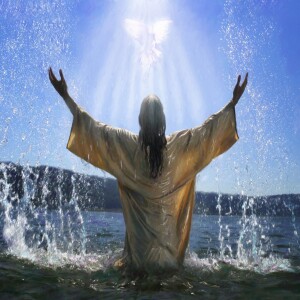
Sermon for the Baptism of Jesus, based on:
Sermon originally delivered January 9, 2011
Monday Jan 02, 2023
Monday Jan 02, 2023
Epiphany is on January 6, so we will be in the Epiphany season this Sunday, as we celebrate The Baptism of our Lord Jesus. The psalm is Psalm 29, and David calls upon all people to worship and give the Lord the glory due to His Name. The voice of the Lord is over many waters. His voice was there at the creation, speaking all things into being, and the Spirit of God was hovering over the face of the waters. The Lord’s voice is also heard and His power is shown in storms and thunder and flames of fire. His voice would also be over the waters of the Jordan River and the Spirit of God would also be there at the baptism of Jesus. The Lord then gives Jesus and His people His strength and peace.
The Old Testament lesson is Isaiah 42:1-9, a prophecy of the coming of Jesus, the Chosen Servant of God. The Spirit of God will be put upon Him, and He will bring new things and a new covenant and be a Light for the nations and for prisoners who sit in the darkness of sin. He will bring God’s justice, yet as One Who does not shout or lift up His voice, but steadily and faithfully serves those in need. The Lord will take Him by the hand and keep Him.
The Gospel, Matthew 3:13-17, tells of the baptism of Jesus. He is baptized “to fulfill all righteousness” - as part of His saving work of doing everything right for us, in our place. As it was prophesied, the Spirit of God also came upon Him in His baptism to strengthen Him, and then the voice of the Heavenly Father identified Jesus: “This is my beloved Son, with whom I am well pleased.”
We are not always well-pleasing to God, though, and we need newness of life and forgiveness of our sins. Jesus died on the cross, once for all, and we received the benefit of what He earned for us, through the grace of God, in our own baptism, as we are told in the Epistle lesson, Romans 6:1-11. We died to our old life, through Christ and rose to a new life, freed from the condemnation of our sins. Now we are called to remember who we are as baptized believers and live for Christ - dead to sin and alive to God in Christ Jesus our Savior.
Monday Jan 02, 2023
Monday Jan 02, 2023
Last week, I discussed why I thought it would be important to consider some of the implications of the Letter of Jude (and other Scriptures) for moral issues today and particularly LGBTQ issues and same-sex marriage and related issues. (If you have not listened to or read last week’s study, I would highly recommend your looking at it first, as what I say today builds upon what was already said.)
Fundamental is the teaching in Genesis 1 that God created people with only two genders, male and female, and in Genesis 2, that God instituted marriage, of one man and one woman, in a life-long commitment, and that was the place for sexual desires to be fulfilled. Our Lord Jesus quoted from Genesis and affirmed these views of marriage, as planned by God “from the beginning.” Other Scriptures quote these passages, in a consistent view of what marriage was and is intended to be.
Obviously, sin then came into the world, in Genesis 3, and great rebellion against God and His will and plans resulted. Genesis 6 described how serious this was, and other Scriptures showed that the struggle with our sinful human nature has gone on ever since, in issues of sexuality and marriage. As I pointed out last week, if we were to do a full study of moral issues, we would need to spend much more time on problems and sins of heterosexual relationships. Sin is sin, and we are all sinners, and we all need God’s grace and forgiveness, in Christ.
I want to continue today by noting that the Jewish moral code for the people of Israel, given by God to Moses and other prophets, supported God’s view of the two genders and sexuality between a male and female in marriage, and warned against all immorality, including some references against same-sex sexual activity. In going through the Letter of Jude, I have already mentioned a number of these Scriptures and will repeat just a few, in more detail.
There is the story of the sins of Sodom. Genesis 13:13 says, ”Now the men of Sodom were wicked, great sinners against the Lord.” And in Genesis 19:1-11, we hear that two angels, appearing as men, came to visit Lot in that town. They were going to stay in the town square, but Lot invited them to stay with him, out of hospitality, but also to protect them. Later that night, all the men and boys of the town came and surrounded the house, saying, “Where are the men who came to you tonight? Bring them out to us, that we may know them.” If you read much Scripture, you know that the term “to know” sometimes means “to have a sexual relationship with.” That is positive within God’s plan for marriage between a husband and wife. Read Genesis 4:1, as an early example, between Adam and Eve. In Genesis 19, though, Lot clearly knew what all these males, young and old, wanted. They wanted to have sex with these men who were visiting Lot. Lot begs them, “Do not act so wickedly,” and suggests a very bad alternative, also immoral according to God’s standards.
The fact that males and boys were involved indicates a real part of homosexual behavior in some times and places. Younger boys were involved and often taken advantage of in the ancient world, especially in Greek culture and among some Romans, too. It involved what we would usually call today a form of “child sexual abuse” - “pedophilia” or “pederasty.” It still happens today. Think of all the stories we have heard of problems of child abuse from some Roman Catholic priests and also from some Protestant leaders and Boy Scout leaders and on and on. I just read an article today about authorities in one place wanting to do away with negative names for such abusers and simply call them “minor-attracted people.” (That seems to be a way to try to “normalize” very dangerous behaviors against children.)
You can read the rest of what happened in Genesis 19 on your own. The angels are able to help Lot and his family to escape, and Sodom and Gomorrah are totally destroyed. Mentioning Sodom became, in Old and New Testament, a way of warning against homosexual and other wrong behaviors, and the term, “sodomy” became a tern for a certain kind of sexual behavior often done by males with each other.
The Law of Moses simply says about homosexual behavior: “You shall not lie with a male as with a woman; it is an abomination” (Leviticus 18:22). This same prohibition is repeated in Leviticus 20:13, with very serious consequences for such a person within Israel.
There are other Scriptures that are related to this issue. Deuteronomy 22:5 says, “A woman shall not wear a man’s garment nor shall a man put on a woman’s cloak, for whoever does these things is an abomination to the Lord your God.” Many think this refers to what we call today dressing in “drag,” as in a “drag show,” with men acting like women or vice versa and acting or speaking in suggestive and immoral ways. It often seems to be an activity of the homosexual community, and is very controversial, especially when children are involved. It is a way of sending mixed and confusing messages about what are clear differences between the two genders, male and female.
Again, we are hearing almost daily today in our own country about such “drag shows” in public libraries and other places where children are involved, and yet the same libraries, etc., refusing to allow programs by people and groups presenting a different moral message. This prohibition of cross-dressing could also speak to those who want to be transgender - a gender different from their birth gender, their natural gender.
The Old Testament says little about lesbianism (woman with woman sexual activity), as it seems to have been uncommon within Judaism and clearly does not fit the Biblical standards, either. The famous Jewish author and historian of the 1st Century AD, Josephus, just after the time of Christ, wrote: “What are our marriage laws? The Law recognizes no sexual connections, except the natural union of man and wife, and that only for the procreation of children. Sodomy (male to male) it abhors, and punishes any guilt of such assault with death.”
In God’s plan of salvation, Jesus, as true man, then came from the Jews. He taught and followed basic Jewish moral Law of the Old Testament, while doing away with ritual and ceremonial laws that were not part of the New Covenant, the New Testament. As a Jew, working largely among fellow Jews, Jesus needed to focus on basic male and female and Biblical marriage issues, as perversions of them by homosexuals and lesbians were rarer. Jesus clearly showed in a positive way what God did want and approve of, in these issues
Once the Gospel began to go more to non-Jews, God inspired the New Testament writers to speak more to the homosexual, lesbian, and bisexual activity so much more common among the Greeks and some other cultures. There were also more temples of false “gods” in these cultures, which had cultic male prostitutes in these temples, who could cater to homosexual desires. The most specific passage about this is in Romans 1:18-32. Paul speaks of the ungodliness and unrighteousness of men who suppress the truth and worship and serve created things, including each other, rather than the immortal God, their Creator. Read especially Romans 1:24-27, where Paul speaks of people following “the lusts of their hearts,” “impurity”, “the dishonoring of their bodies along themselves” (v.24). Then Paul becomes very specific about some of their “dishonorable passions.” “For their women exchanged natural relations for those that are contrary to nature” - lesbian sexual relations. “And the men likewise gave up natural relations with women and were consumed with passion for one another, men committing shameless acts with men - homosexual sexual activity - “and receiving in themselves the due penalty for their error” (v.26-27).
The root problem is a form of idolatry, These men and women do not see fit to acknowledge God (and His clear plans for males and females and sexuality only between a man and woman united in marriage, as we have seen). Instead, they follow their own “debased minds,” their own bad choices, and “do what ought not to be done” (v. 28). And equally bad, “they give approval to those who practice,” who keep on doing these same things (v.32). Couldn’t that be a description of exactly what many in the LGBTQ community are doing - encouraging and supporting and pushing for approval of these sinful behaviors?
There are other places, too, where the New Testament points out that these behaviors are wrong in lists of other wrongdoing. See 1 Corinthians 6:9: “the sexually immoral,” including “men who practice homosexuality,” and 1 Timothy 1:10: “the sexually immoral,” including “men who practice homosexuality”… and whatever else is contrary to sound (healthy) doctrine.” One could also point to Hebrews 13:4: “Let marriage be held in honor by all, and let the marriage bed be undefiled.” In the context of the whole of the Scriptures, this refers to the marriage of one man and one woman, one male and one female, in a lifelong commitment, with a sexual relationship only there.
Again, I am already going on too long and will stop for today. We will continue with this subject for at least one more week - maybe two. We still need to talk about what is actually going on in the LGBTQ community according to polls and the CDC and other research, and about the divisions and splits that are going on in various church groups over this issue and how we are to respond as Christians. Keep reading and studying and praying and above all, listening to God’s Word, and asking His forgiveness for when you have failed, too, and His help to try to do better.
Monday Jan 02, 2023
Monday Jan 02, 2023
Sermon for the First Sunday after Christmas, based on:
Sermon originally delivered December 29, 2013
Monday Jan 02, 2023
Monday Jan 02, 2023
Sermon for New Year's Eve, based on:
Sermon originally delivered December 31, 2013
Wednesday Dec 28, 2022
Wednesday Dec 28, 2022
There are two possible sets of readings again this Sunday. Some churches may celebrate the Circumcision and Naming of Jesus, eight days after His birth. The Gospel, Luke 2:21, tells how His family obeyed Old Testament law in having Him circumcised, and His blood was shed, prefiguring His final shedding of blood on the cross. He was given the name, Jesus, for He would one day do that final sacrificial work as the “Savior“ of the world.
The Psalm is Psalm 8. David twice speaks of the majesty of God’s Name. He is Lord and the Creator who set all things in place. Yet He will humble His own Son as a man, the Son of Man, lower than the angels, to do His saving work on earth, and then be crowned with glory and honor and given all dominion once again.
The Old Testament lesson, Numbers 6:22-27, is the Benediction, the blessing that Moses was to give to God’s people. That Benediction is still used often today in worship. The Lord will bless, keep, be gracious to us, and give us peace, as He looks upon us with His Favor.
The Epistle lesson is Galatians 3:23-29. Paul tells us that once we were captives, imprisoned under the law. But once we are connected to Christ through our baptism and faith in Him, we are children of God and all one in Christ and are heirs of all the promises of God.
The Sunday service might also include, instead, readings for the first Sunday after Christmas. In the Psalm, Psalm 111, the Psalmist praises God for all His wondrous works and gives thanks to Him in the congregation, with other believers. The Lord has kept the promises of His Covenant and will send redemption to His people, (finally coming through Jesus). We, in turn, can now grow in fear and trust in the Lord and in wisdom and good understanding, through Christ as our Savior.
The prophet Isaiah also recounts, in the Old Testament lesson, Isaiah 63:7-14, the steadfast love of the Lord. He redeemed and saved and carried along His chosen people, and even though they rebelled against Him and grieved His Spirit, He would reach out and put His Spirit again in their midst and give them rest, in His compassion.
How would God do all this? Paul tells us, in the Epistle lesson, Galatians 4:4-7, that in the fullness of time, God did send His own Son, born of a woman, to redeem all who were under the burden and condemnation of the law, and turn them (and us) from slaves into sons, children of God, and heirs of eternal life through faith in Him.
The Gospel lesson, Matthew 2:13-23, continues the Christmas story. Not only did God send His Son into the world, He also protected Him, warning Joseph and Mary to flee to Egypt with Jesus and escape the massacre of children by King Herod and then calling them back out of Egypt, once Herod died, and returning with Jesus to Nazareth. All this fulfilled prophecy after prophecy from the Old Testament - Hosea 11:1 and Jeremiah 31:15-17 and the words of Philip in John 1:46, etc. God will keep His promises to us, too, in Christ.
Wednesday Dec 28, 2022
Wednesday Dec 28, 2022
Last week, we heard Jude talking about “having mercy” on people who are continually doubting and wavering about their faith; those heading toward hell who need to be snatched out of that coming fire; and those who are far gone, who need to be approached with fear and with hatred of their fleshly evil, and yet shown mercy, with the desire of their repentance and return to the faith.
Remember that Jude was talking about people who have crept into the church, who are within the church, and yet unnoticed, without people being really aware or caring enough, who have rejected God’s word and changed teaching, especially about moral issues and are promoting deeds of ungodliness, including sexual immorality and unnatural desires.
Jesus said to believing people, “You are the salt of the earth… You are the light of the world… Let your light shine before others” (Matthew 5:11-16). Jesus Himself, of course, is the “True Light,” the “light that shines in the darkness” of this sinful world, through His Word and works, and “the darkness has not overcome” Him (John 1:1-11). But Jesus warned that the sinful world would fight back against the truth. Jesus said, “If the world hates you, know that it has hated Me before it hated you. If you were of the world, the world would love you as its own; but because you are not of the world, but I chose you out of the world, the world hates you” (John 15:18-19).
Paul also warned that the attacks would come from within. “Fierce wolves will come in among you, not sparing the flock; and from among your own selves will arise men speaking twisted things to draw away the disciples after them” (Acts 20:29-32). That is exactly what Jude was writing about as he sent his letter to churches facing these problems in the early church. And that is a problem again today within too many churches.
I am going to focus on just one problem among many - the whole LGBTQ movement and same-sex marriages and related issues. It is a very hot topic today, about which one hears everywhere. My own church body, the Lutheran Church-Missouri Synod, had a national youth gathering this summer of more than 18,000 young people of high school age. The youth were asked to share the issues they wished the church would talk about more. Do you know what they picked as the #1 issue? LGBTQ issues.
That is what we will focus on, and if you just work through the Scriptures God’s point of view becomes very clear. The very first chapter of the Bible says, “God created man in His own image, in the image of God he created them; male and female He created them” (Genesis 1:27). There are only two genders - male and female. There is no mention of any other genders in the Bible, even though some speak of numerous “genders” today, especially in the LGBTQ community, but among others and even in some churches, too. God knows only two genders, though - male and female.
Then in Genesis 2, God instituted marriage, bringing the first man and woman together. Ever after, “therefore, a man shall leave his father and mother and hold fast to his wife, and they shall become one flesh. And the man and his wife were both naked and were not ashamed” (Genesis 2:24-25). That is where sexual activity was to take place, within a committed marriage between one man and one woman, who could be fruitful and multiply, and raise children in a stable place of love and care in the Lord.
Jesus affirmed this plan of God when he was asked about divorce. He said, “Have you not read that He who created them from the beginning made them male and female?” Jesus then quoted from Genesis 2:24 and added, “So they are no longer two but one flesh. What therefore God has joined together, let man not separate.” Read carefully Matthew 19:3-6. Marriage was intended by God to be a lifelong commitment of one man and one woman together. See also Mark 10:6-9. This same passage from Genesis 2:24-25 is quoted in other contexts, too, in Ephesians 5:31, 1 Corinthians 6:16, and 1 Corinthians 7:10-11, and both Old and New Testaments uphold this view of marriage consistently.
Obviously, the rebellion against God and fall into sin happened and is described in Genesis 3. The perfect relationship between the first two people was broken, and distortions of God’s plan happened quickly. There was murder within the first family, and by Genesis 4:19, we hear of a man who “took two wives,” clearly against God’s will. By Genesis 6:5, we read that “the wickedness of man was great on the earth, and that every intention of the thoughts of his heart was only evil continually,” and “… all flesh had corrupted their way on the earth” (Genesis 6:5, 11-12).
The judgment of the great flood obviously did not solve the problems of sin and evil in every human heart, including that of Noah and his family and the generations that followed. God followed His eternal plan of working through a particular nation, the nation of Israel, the Jewish nation, so that eventually from that nation would come the Savior of the world, Jesus, a true Jewish male and yet also the Son of God.
God provided through the prophets, especially Moses, specific rules and regulations for the nation of Israel, including sexual morality. (Many of the ceremonial rules and other requirements in the Old Testament were done away with by Jesus, as Lord of the Sabbath and Lord God of the New Covenant, focusing on Himself and His saving work in love for all nations and the whole world. The New Testament helps clarify those things, doing away with many Sabbath and dietary and ceremonial and other rules and festivals, but keeping the basic moral law and the Ten Commandments, though the day of worship is no longer the specific Old Testament one.)
Sadly, God’s own Old Testament chosen people broke law after law of God’s will for them, including God’s plan for marriage and sexuality. Even many of the leaders failed in this regard - and we read of polygamy and adultery and divorce and on and on, even among heterosexual people. In fact, for this study of sexual immorality to be complete, we would have to focus mostly upon such heterosexual failings and sins. Those are the most common within churches today, most likely, as people struggle to follow what they know is the right way God wants them to live.
This study, though, will focus upon the concerns with LGBTQ people and their problems, particularly. But we must speak humbly, and remember the old saying, “If you point one finger at someone else, you are pointing several fingers back at yourself.” Sin is still sin, whatever it is, and we all need forgiveness, and can live only by the mercy of God, especially when we remember that we sin by thought and word, as well as deed. Jesus Himself said, “Everyone who looks at a woman with lustful intent has already committed adultery with her in his heart.” He also said, about judging, “First take the log out of your own eye, and then you will see clearly to take the speck out of your brother’s eye” (Matthew 5:27-28 and Matthew 7:5). At the same time, we must speak honestly about sin and evil, especially when others are calling evil “good” (See Romans 1:32).
I don’t want this to get too long, so I will continue with this next week, even as some of these things are difficult even to talk about. I will not get too specific about some things, for as Paul wrote, “Take no part in the unfruitful works of darkness, but instead, expose them. For it is shameful even to speak of the things that they do in secret” - and now, even in public, at times (Ephesians 5:11-12). The Lord’s blessings, as you continue to think about this difficult subject.
Wednesday Dec 21, 2022
Wednesday Dec 21, 2022
There are a number of possible sets of readings for Christmas Eve and Christmas Day this weekend. What I have here may not be exactly what you will hear, depending on when and where you attend worship, but these are some of the important Christmas readings to be thinking about.
The Old Testament lesson is from Isaiah 62:10-12. This is a prophecy that a remnant of God’s people will be able to “go through the gates” where they have been captive and return to the promised land and to “Zion,” the city of Jerusalem. It is there that the Lord Himself will come bringing “salvation,” His “reward,” His blessing, and His “recompense,“ His just judgments. He will “redeem” people and call them “holy” and His people will not be “forsaken.” The New Testament centers all of this in the coming of Jesus to Israel, “the daughter of Zion” (see Matthew 21:5); but this is good news to be “proclaimed to the end of the earth” - for Jesus came to be the Savior for all people. See how all believers in Christ, including us, are called God’s chosen, holy people, who are not forsaken, but receive mercy from Him, in the words of 1 Peter 2:9-10.
The Psalm is Psalm 98, a ”new song” of praise to the Lord for the marvelous way He would provide salvation for “the house of Israel” but also for people in “all the ends of the earth.” All creation (“seas” and “rivers” and “hills” - and maybe even Christmas trees and beautiful decorations?!) should “sing for joy,” and all people should praise the Lord with “joyous songs” and all kinds of musical instruments. This sounds like a joyous Christmas celebration - when we realize that the tiny baby born in Bethlehem is “the King, the Lord, our Lord Jesus.” He came to “work salvation” and bring righteousness and equity (uprightness) to us, as we trust in Him and what he has done for us.
The Gospel lesson is Luke 2:1-20. Mary and Joseph are forced to make a long trip to their ancestral home to be registered to be taxed by the Roman government. But this place is Bethlehem, exactly where Old Testament prophecy said the Savior of the world would be born. Mary has her baby there, in very humble circumstances, where animals were kept, and the baby Jesus was placed in a manger, a feed trough for animals, because there was no other available place for all this to happen. The first people to hear about this were lowly shepherds. A multitude of angels praised God and announced to the shepherds what was “good news” for them and for “all the people” (including us). The Savior, Jesus, Christ the Lord, was born! The shepherds went to see the baby Jesus and glorified and praised God and told others about this Child. And believers are still praising God and talking about Jesus, to this very day.
The Epistle is Titus 3:4-7. Titus reminds us that the coming of Jesus was entirely a gift to us and the world, through “the goodness and loving kindness of God.” Jesus came to save us, not because of anything we had done, but because of His own mercy for us. God the Father sent His Son to us. Jesus did everything necessary for us to be our Savior. God the Holy Spirit then brought to us personally the blessings of what Jesus had done, through our baptism, “the washing of regeneration and renewal.” As water, connected with the Words and promises of God, was poured on us, our sins were washed away and we were reborn and renewed as children of God and “justified,” forgiven and counted righteous and acceptable to God, through the Holy Spirit. We are now also “heirs of eternal life” by faith in Jesus, and the Holy Spirit continues to work in us through the Word of God and the Sacraments, to keep us in that faith. This was all purely by God’s “grace” - His undeserved love and favor given to us as a gift. No wonder we thank and praise and worship our great God and especially our Lord Jesus, as we celebrate the gift of His birth this Christmas! A blessed and joyous Christmas to you all.
Wednesday Dec 21, 2022
Wednesday Dec 21, 2022
Last week, we heard that there were many predictions of “scoffers” who would come in the last times and challenge God and His Word. Some would even be within the churches, yet were “worldly” people, without the Holy Spirit, but following “their own ungodly passions,” and causing “divisions” (Jude, v.17-19). God’s faithful people were not left without help and hope, though. They had the Word of God, through which they were built up in their “most holy faith,” in “the love of God” and praying by the power of the Holy Spirit. Above all, they continually had the “mercy of our Lord Jesus Christ,” who would “lead them to eternal life” (Jude, v.20-21).
The believers knew that they were still sinners, yet were “beloved” and forgiven, “called” to a “common salvation” through the “grace of God” in “Christ Jesus the Lord” (Jude, v. 1-3, portions of v.4). If God so loved them, they were called to seek to show that same love and mercy to others, even in their own churches, who were struggling spiritually. Jude said that to them in Jude, v. 22-23, describing in a very brief way three different kinds of people among them, in addition to firm believers.
First, there were those who were “doubting.” The Greek suggests that these were people who knew some about the Christian faith, but were continually doubting, continually “wavering” within themselves about the faith, with lots of questions, and were easily drawn into sinful behavior. They needed to be approached by concerned Christians in a way that is described in other Scriptures like Galatians 6:1-2, Romans 15:1-7, Ephesians 4:12-16,
and Ephesians 4:32, in a gentle, caring way, with believers ready always to explain their own hope that was in them, in Christ (1 Peter 3:15, Jude, v.22).
Then there were others who had drifted far from the faith, if they were ever really in faith, and were in great spiritual danger. Jude said, seek to “snatch them out of the fire” (Jude, v.23). These are people on the road to hell, rather than to heaven, if left on their own, as they were. Hell is pictured in various places as a “fiery” place of judgment, for those apart from the Lord. See the words of John the Baptist, who warned that “Every tree therefore that does not bear good fruit is cut down and thrown into the fire;” and “the chaff He will burn with unquenchable fire” (Matthew 3:10,12). (See also the words of our Lord Jesus Himself in passages like Matthew 5:22: “Everyone who is angry with his brother will be liable to judgment… and whoever says, “You fool!’ will be liable to the hell of fire.” See also Jesus’ words in Matthew 7:19, Matthew 25:41,46, and the words of Revelation 20:10 and 14,15.)
When we hear these words, we realize that we, too, deserved that judgment, because of our own sins, but were rescued by what Jesus has done for us as the Savior and by our being personally brought to faith in Jesus and by the gift of baptism. We did nothing to deserve God’s mercy, but He gave it to us by His grace. And God wants more and more people to be “snatched out of the fire” and brought to forgiveness and trust in Him.
See the story in Zechariah 3:1-5, where the Lord calls Joshua the high priest “a brand (a burning stick) plucked from the fire.” Joshua was “a high priest,” a leader among God’s people, and yet is described as wearing “filthy garments,” symbolic of his sins. His filthy garments are removed, and he is clothed with “pure vestments,” as the Lord said, “I have taken your iniquity away from you.” In Zechariah 3:10, the Lord also promised, “I will remove the iniquity of this land in a single day,”
All this was predicting what Jesus would do on Good Friday. He was “the Lamb of God, who” in one day “would take away the sin of the world” (John 1:29) and provide a “robe of righteousness” and “salvation” for all who would be brought to faith in Him (Isaiah 61:10-11 and Revelation 19:7-8). The Scriptures promise, ”In Christ Jesus you are all sons of God through faith. For as many of you who have been baptized into Christ have put on Christ” (Galatians 3:26-27). God now sees Christ in those who are baptized and believe in Him, and they will be saved, but whoever does not believe will be condemned” (Mark 16:16). Unbelief and its evil fruit and evil deeds are what condemns.
God gave such a warning to His own people in the Old Testament, using an image just like what was used by Zechariah and now by Jude. The prophet Amos said, “You were as a brand (a burning stick) plucked out of the burning, yet you did not return to Me,” declares the Lord” (Amos 4:11). Even though Christ died for all, some can choose to resist and reject Him and His saving work and never come to Him or return to Him.
Ultimately, it is God who brings people to faith in Christ, through the Holy Spirit, but God often used people like Jude, and Christians in the churches to whom he wrote, to bring to people the call to repentance (since God does take sin seriously) and the Good News of forgiveness and hope only through Christ Jesus. If some come to renewed faith in Christ, those people are “snatched out of the fire” and have God’s eternal blessings and a better life now, as they seek to follow His will, which is always best.
The third group of people that Jude wanted to reach out to through the believers is the most difficult, and Jude said, the most dangerous to approach. Jude still said to “show them mercy,” but to do so “with fear” and “hating even the garment stained by the flesh” (Jude, v.23). These are the people for whom Jude used his strongest words of condemnation, because they were openly going against God and His Word and will, especially, it seems, in regard to sexual immorality, “following their own sinful desires.“ They were “loud-mouthed” and “malcontents,” and really wanted to “gain advantage” over others and draw them to their own ideas and lifestyles, which were “such ungodly ways” (Jude, v.15-16).
These people even needed to be approached “with fear,” because they could be so influential to believers in such negative ways and create so much division. Remember the warning in Galatians 6:1: “Keep watch on yourself, lest you too be tempted” and be drawn astray to things that sound good, or at least OK, but are really not. Jude even used the very strong word “hate” with regard to “the garments stained by the flesh” and where fleshly desires might lead. God does not want to “hate” people, and John taught that “everyone who hates his brother is a murderer” (1 John 3:15) and is “in the darkness” (1 John 2:11).
At the same time, God is holy and just and wants people to do what is right and good and is best for them and others and can never approve of evil, or of people doing evil. David says of the Lord, “You are not a God who delights in wickedness; evil may not dwell with You… You hate all evildoers” (Psalm 5:4-5). At the same time, we read that “God so loved the world,” that He sent His only Son to suffer and die for all, including evildoers, which we all are” (John 3:16) and that “God showed His love for us in that while we were still sinners Christ died for us” (Romans 5:8).
So, God hates all evil and can never approve of it or call it acceptable. Yet He still wants to “show mercy” to sinful people who have gone far astray and bring them to repentance and faith. That includes us, who have been shown God’s amazing mercy. We have been spotted, stained by sin, yet we were saved with the precious blood of Christ, like that of a lamb without blemish or stain” (1 Peter 1:18-19). So, Jude also called for the Christians to show mercy to the toughest people in the churches, without approving of their behaviors, and guarding against being influenced by them.
Jude closed his letter, then, with a word of blessing and encouragement, giving all glory to God. It is God, Jude said, who can keep the faithful people in the churches from stumbling, so that they would not be influenced by false people and wrong ideas and living in wrong ways. It is God who can also help God’s people who are trying to witness to those going astray, in finding the proper balance between the Law, which can show people the reality of their sins, and the Gospel of Jesus, who alone can save through His work already done for the world.
Christians are still imperfect sinners in this world, but are forgiven and counted as saints and “presented as blameless” when they (and we) are presented before God in heaven. The glory and majesty and dominion and authority are all God’s, for His creating and redeeming work on our behalf. The Triune God, Father, Son, and Holy Spirit, existed “before all time” and is with His people now (including today and whatever we are going through) and will be with His people, including us, forever in eternal life. Jude can only close his letter with the word “Amen.” This is most certainly true!
Someone wrote me recently that “Jude has a lot more information than I imagined, still relevant to today.” Amen! That is also most certainly true. Next week, I will try to make some practical applications of what we have been reading to some of the moral issues of today, which are troubling many churches, including such things as gender and LGBTQ issues, as well as adultery and sex before marriage and divorce. We need to talk more about some of these issues in the church, but if you prefer not to, just avoid the next podcast or podcasts. A blessed Christmas to all, too.