

5.9K
Downloads
730
Episodes
Weekly sermons and Bible studies led by a retired pastor of the Lutheran Church-Missouri Synod
Episodes

Tuesday Apr 07, 2020
Tuesday Apr 07, 2020
Sermon for the Fifth Sunday in Lent, based on:
Sermon originally delivered April 10, 2011
Tuesday Apr 07, 2020
Tuesday Apr 07, 2020
Sermon for the Fourth Sunday in Lent, based on:
Sermon originally delivered April 3, 2011
Monday Mar 16, 2020
Monday Mar 16, 2020
Wednesday Mar 11, 2020
Wednesday Mar 11, 2020
Last week, we reviewed a bit of the introduction to Colossians. We also looked at Romans 1:1,7 and 1 Corinthians 1:2, to get more insight into what it means to be saints - people “loved” and “called by God to be saints” and “set apart” as “sanctified” people, counted as holy through what Jesus has done for us and our connection with Him. Paul counts as saints all believers, “all those who in every place call upon the name of our Lord Jesus Christ” in faith.
Paul wishes the blessing of “grace” (the gift of God’s undeserved love and favor) and “peace” for the people of Colossae and for us all. (See how He speaks of “peace with God” in Romans 5:1-5, and the hope it brings us, even in times of suffering.) As an example of the grace and peace that God gives, we looked briefly at the Old Testament Book of Jonah. The prophet Jonah said to God, “I knew that You are a gracious God and merciful, slow to anger and abounding in steadfast love, and relenting from disaster” (Jonah 4:2). Sadly, Jonah hated the evil people of Nineveh, to whom he was to go and preach, and did not want them to receive such grace and peace. He tried to run away from God, until God turned him around, partially through a great fish, and Jonah had to preach the truth, and the people of Nineveh repented and believed, by the grace of God. (See Jonah 3, and Jonah 4:11.) It is that grace and peace that God really wishes to keep giving to the people of Colossae and to us all.
As in most of his letters, Paul then offers a prayer of thanksgiving to God for all the good that is happening in Colossae and in all the world, as ”the Word of the truth, the Gospel,” is proclaimed and taught (Colossians 1:3-8). Note that Paul thanks the triune God in these verses (which in the Greek language are all one sentence). There is “God the Father” (v.3) and “our Lord Jesus Christ” (v.3,4) and “the Spirit” (v.8). This is the way the Trinity appears in the Scriptures - not with a neat definition, but with the one true God, Father, Son Jesus, and the Holy Spirit, simply working for us and our good.
Note also that Paul rarely thanks the Christian people directly, but thanks God for them, because it is through God’s work in them that they are believers in Jesus (v.3). As he often does, Paul also speaks of “faith," “love," and “hope." People “hear the Word of the truth, the Gospel” (v.5) and come to “understand” (to know and truly realize) “the grace of God in truth” (v.6) and come to “faith in Christ Jesus” (v.4). God’s Word has power, because the Holy Spirit is at work through it, and “in the whole world it is bearing fruit and growing" (v.6), wherever it is proclaimed and taught. (See Romans 1:16 and 10:14-17, for the importance of sharing the Gospel and the whole Word of God.)
Through the Word of God, then, “love for all the saints” grows (v.4) and confidence in “the hope laid up in heaven” for all believers (v.5) - the promise of eternal life in Christ. It was a man named Epaphras, who had brought the Word of God to Colossae, as “a faithful minister of Christ” on their behalf (v.7).
Paul, on one of his missionary travels, had worked in Ephesus for two years, sharing the Gospel. Likely, Epaphras was one of the converts to faith in Jesus and then was sent to Colossae (about 100 miles southeast of Ephesus, but still in the Roman province of Asia) to start a mission church there, too. (You can read about some of the work in Ephesus and the surrounding area in Acts 19-20. Note especially Acts 19:8-11, and the reaction of people who opposed Paul, also in Acts 19:23-26.)
Paul could not do all this work himself, and so Epaphras and others worked of God’s behalf in places like Colossae (v.7), with much blessing from God. However, false teachers and teaching were now troubling the church in Colossae; and Epaphras has traveled to Rome to report to Paul, a prisoner there, and to tell him the good news (v.8) and to ask his help in dealing with the bad news and false ideas, about which we will hear as this letter goes on.
(For those listening to podcasts, these are real studies with real people. There are interruptions, as with a phone call from my family in the middle of this study; and the recording does not always get turned on and off as it should, I do not have time to edit the recordings; so try to bear with it all, as if you were right there in the study with others. if you have helpful thoughts and suggestions for all this, or questions at any time, let me know.)
Sunday Mar 08, 2020
Sunday Mar 08, 2020
Sermon for the Second Sunday in Lent, based on:
Genesis 12:1-9
Romans 4:1-8, 13-17
John 3:1-17
Sermon originally delivered March 20, 2011
Thursday Mar 05, 2020
Thursday Mar 05, 2020
We have begun our new study of Paul’s Letter to the Colossians with an introduction to the letter. Next week we will get into a verse by verse study of the letter, beginning with Colossians 1:1. Here is a summary of the introduction to Colossians.
Colossae was a city in Phrygia, an area within the Roman province of Asia (not what we call Asia today). Colossae was about 100 miles southeast of Ephesus, the capital of Asia, and was close to another city we hear about in Revelations, the city of Laodicia. All of these cities were in what is part of the country of Turkey today.
The apostle, Paul, had traveled near to Colossae during his missionary journeys, but has apparently never visited there himself. (See Colossians 2:1.) One of his converts to Christianity, Epaphras, had probably been sent to Colossae by Paul and had started a Christian church there. (See Colossians 1:7.) At some point, the church was being troubled by false teachings and the idea that some new knowledge, beyond that of Jesus and His saving work, was necessary for the people. Epaphras then travels to see Paul to get help in dealing with these new, false ideas that endangered the Christian faith itself.
Paul was in prison when Epaphras went to see him. (See Colossians 4:3, 10, 18.) Most likely, this was the first Roman imprisonment of Paul, from 58-60 AD. Earlier, Paul had traveled to Jerusalem, where he had great conflicts with Jewish authorities and was arrested. Nothing was being resolved so Paul, as a Roman citizen, eventually appealed to Caesar in Rome to settle his case. (Paul was Jewish, but had been born in a free Roman city, and therefore had Roman citizenship. You can read about this time in Jerusalem and Paul’s dangerous trip to Rome in Acts 21-28.)
We hear in Acts 28:16ff that Paul was in house arrest for two years in Rome, in chains, with a guard watching him, and yet able to have visitors like Epaphras and to share freely the good news of Jesus. See Acts 28:30-31. It was during this time that Paul also likely wrote his letters to the Ephesians, the Philippians, to Philemon, and to the Colossians - what are called the “prison” letters of Paul that we find in the New Testament of the Bible. (It seems that Paul then was released from prison and was able to carry on his ministry for a number of years longer, before being arrested again and executed in Rome.)
The Letter to the Colossians, then, was Paul’s advice and encouragement to Epaphras and the people of Colossae, with a strong focus upon Jesus - Who He was and what He did - and how He is completely sufficient for them and for us, for salvation. The new, false ideas coming to Colossae were wrong and dangerous, as they still are when we confront them today.
Finally, since letters in those days were written on parchment scrolls, Colossians follows the typical letter form, with the author identifying himself first and then the people to whom he writes. Paul most always adds an initial blessings and prayer at the beginning.
Wednesday Mar 04, 2020
Wednesday Mar 04, 2020
Sermon for the First Sunday in Lent, based on:
Sermon originally delivered March 13, 2011
Wednesday Mar 04, 2020
Wednesday Mar 04, 2020
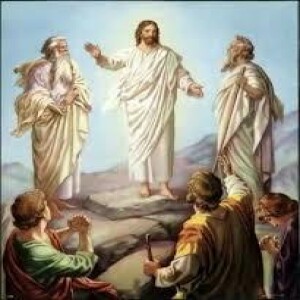
Sermon for the Transfiguration of Our Lord, based on:
Sermon originally delivered March 6, 2011

Wednesday Mar 04, 2020
Wednesday Mar 04, 2020
Sermon for the Eighth Sunday after the Epiphany, based on:
Sermon originally delivered February 27, 2011
Friday Feb 28, 2020
Friday Feb 28, 2020
In this study, we looked at Psalm 95. The author is not identified, but part of the psalm is quoted in Hebrews 3:7-11, with the introductory words: “Therefore, as the Holy Spirit says:” This is again a reminder that every part of the Scriptures is a message from God, inspired by the Holy Spirit, no matter who the human writer is.
Verses 1-7A of Psalm 95 are also sung in our Lutheran liturgy in the Matins Service (p.220-221, LSB) and in Morning Prayer (p.236-237, LSB). This song called the “Venite," the Latin word meaning “Come!” Psalm 95 calls us to come into the presence of the Lord and worship Him, in His tabernacle, His temple (V.1,2,6), and in our churches today. We sing to and praise and thank our Lord - and even if we are not good singers, we can still make a “joyful noise” to the Lord (V.1-3).
Why do we sing these praises? Because “the Lord is a great God and a great King above all gods” (V.3). He is the only true God, in contrast with all the false gods and idols that others follow. (See also Psalm 96:4-5, for example.) And He is the “Maker” of all things - the heights and depths, the sea and land, and our own Maker (V. 4-6). We are His sheep, and He cares for us, in His pasture (V.7). He is “the Rock of our salvation,” above all, the Foundation for our future and for eternal life (V.1).
These last words point forward to Jesus, Who is our Good Shepherd and knows us by name and cares for us. (See John 10:2-4, 11ff., Ephesians 2:19-22, etc.) We have so many blessings for which we can praise God.
The Psalm ends, though, with a word of warning. Knowing that we are weak, sinful human beings, we are to “bow down” and “kneel” in humble worship before our Lord and keep hearing His voice, so that we do not harden our hearts and go astray against God, in rebellion and loss of faith (V. 7B-11). The example is given of the children of Israel and their rebellion against Moses and God, complaining and quarreling and putting God to the test in the wilderness in Exodus 17:1-7 and again in Numbers 20:7-13 and so many more times in their 40 years of wandering, after their rescue from slavery in Egypt. See also Deuteronomy 6:16 and Psalm 78:15-22 and
1 Corinthians 10:1-12 and Hebrews 3:7-14 and 16-19.
The call is to begin in faith, by the grace of God, but also to continue in that faith in Christ our Savior, today and every day, as God is faithful to us with His gifts and blessings day after day (Psalm 95:7 and 2 Corinthians 6:1-2 and Hebrews 4:1-3,11-16). By God’s grace, “we hold fast our confession," confident in God’s grace and mercy in Christ.